Volvo 240 History: How the Tank Reputation Came to Life
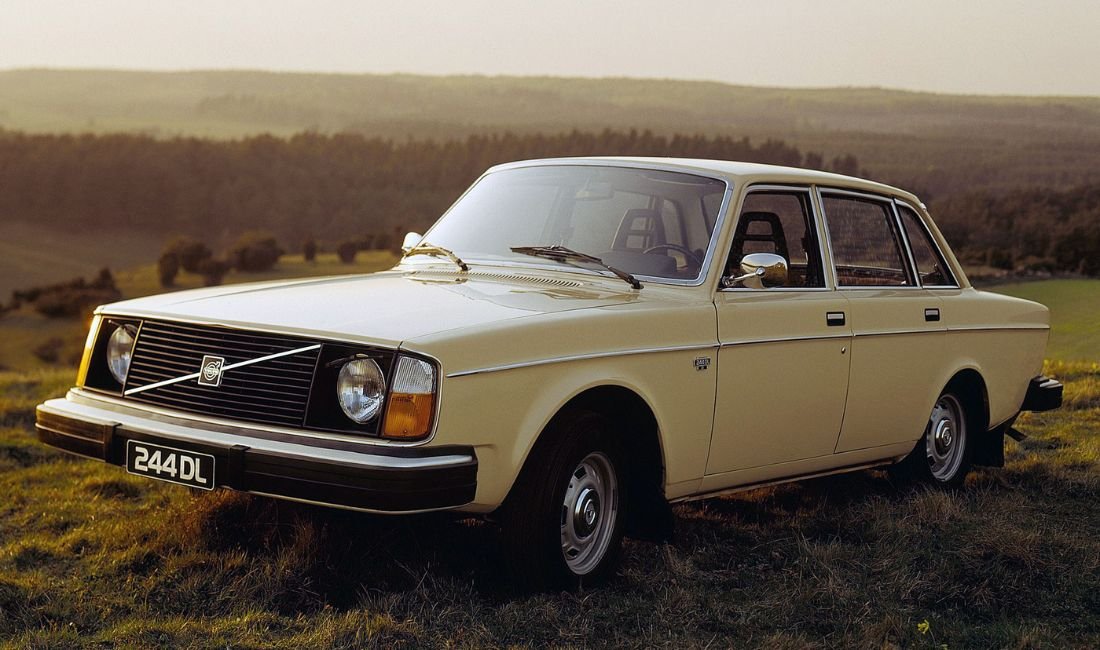
Volvo built the 240 from 1974 to 1993, kept the fundamental design essentially unchanged for two decades, and sold millions of units to owners who drove them to mileages that the automotive press documented with genuine surprise throughout the production run. The Volvo 240 earned the ‘tank’ nickname from owners who put 300,000, 400,000, and, in documented cases, 500,000 kilometres on their cars through straightforward maintenance and no particular mechanical drama. Jalopnik has featured the Volvo 240 as a defining automotive icon of an era when engineering prioritised durability and structural honesty over feature count. That reputation came from twenty years of real-world performance that owners experienced personally, not from any marketing campaign Volvo ran.
Volvo 240 Engine and Engineering: Why It Lasts So Long
The B21 and B23 inline four-cylinder engines powering most Volvo 240 production ran at conservative power outputs relative to their displacement. Volvo calibrated for longevity rather than performance numbers, leaving substantial thermal and mechanical headroom that translated directly into service life. The B21 produced around 97 horsepower from 2.1 litres. A comparable engine pushed for maximum output from the same displacement runs hotter, wears faster, and needs attention sooner. Volvo made the conservative choice deliberately because their buyers understood the trade-off and valued the outcome.
Hemmings Motor News has documented Volvo 240 survivor stories from owners who accumulated over one million kilometres on single examples through disciplined maintenance. That remains one of the most compelling product endorsements any automobile has ever received from the people who actually owned and operated it daily across decades.
Volvo 240 Estate Wagon: The Car That Made Wagons Cool
The 245 estate variant of the Volvo 240 achieved something no other waggon in automotive history managed as completely: it made practical family car ownership a deliberate lifestyle statement. Architects, physicians, academics, and musicians chose the 240 estate through the 1980s not because alternatives were unavailable but because the waggon communicated a clear set of values: practicality without pretension, quality without ostentation, and capacity for real work without sacrificing refinement. The cargo floor was loaded flat, wide, and deep. The tailgate opened to the full body width. No SUV yet existed to fill that position, and no estate waggon before or since has held the cultural status the 240 estate occupied in its prime decade.
The estate’s collector resonance shows in pricing. Road and Track recently covered the Volvo 240 estate market appreciation and noted that younger collectors who never owned one new approach the 240 estate as a combination of genuine daily usability, mechanical accessibility, and a visual identity that modern vehicles cannot replicate at any price. Clean estate examples consistently command higher prices than equivalent sedan variants.
How to Buy a Volvo 240: Rust Checks and Inspection Guide
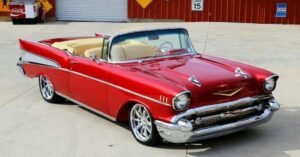
Rust defines the Volvo 240 purchase decision above every other factor. Much like other classics such as 1957 Chevrolet Bel Air. America’s most iconic cars play a crucial role in long-term value. Early production years received no hot dip galvanisation, and northern climate examples from the late 1970s through mid-1980s show significant structural corrosion in sill sections, front subframe mounts, floor pans, and rear wheel arches. Surface rust on exterior panels costs money but remains manageable. Structural rust in load-bearing sections compromises the crash protection that defines the 240’s core value and turns a desirable classic into a parts donor. Buy the cleanest body available and treat rust condition as a non-negotiable evaluation criterion rather than a price negotiation variable.
Mechanically the Volvo 240 rewards disciplined maintenance with continued reliability. The Amish oil change discipline suits the B21 and B23 engines perfectly: correct specification oil, complete drainage, proper drain plug torque, and on-schedule intervals. These engines tolerate nothing less and reward proper care with decades of service. Volvo Cars heritage documentation covers the 240 production history and specification details that buyers need for accurate condition assessment across production years.
Volvo 240 vs Saab 900: Which Swedish Classic to Buy
Collectors who focus on Swedish cars from this era eventually face the comparison between the Volvo 240 and the Saab 900. Both represent their manufacturer’s engineering philosophy applied completely to a family car at similar price points. The Volvo 240 prioritised structural robustness, longevity, and mechanical simplicity that any owner could understand and maintain independently. The Saab 900 prioritised engineering originality, driver engagement, and solutions to problems no other manufacturer had identified. Both approaches produced exceptional cars. The 240 suits buyers who value durability and physical simplicity. The 900 suits buyers who want to own something genuinely unlike anything else on the road.
Volvo 240 Safety Legacy and Its Global Industry Impact
The crash research Volvo conducted using real-world accident data during the 240 production run influenced regulatory bodies and manufacturers worldwide. Volvo introduced the rear facing child seat concept, developed side-impact protection research that predated mandatory airbag legislation by fifteen years, and published accident data openly while competitors treated safety research as proprietary competitive intelligence. The Drive published a thorough examination of Volvo’s influence on global vehicle safety standards that traces how ‘240 era’ research shaped the testing frameworks every modern vehicle now must satisfy. The Volvo 240 was not merely safe for its time. It advanced what safety demanded from the entire industry. The total absence of coding hours requirements makes it equally accessible to first-time classic owners.
Frequently Asked Questions About Volvo 240
What engine options did the Volvo 240 offer across its production life?
The Volvo 240 offered the B21 2.1-litre naturally aspirated and turbocharged four-cylinder, the B23 2.3 litre naturally aspirated and turbocharged four-cylinder, and, in certain markets, a 2.4-litre diesel inline six. The turbocharged B21T producing around 127 horsepower remains the most sought-after engine specification among performance-orientated 240 buyers.
Why does the Volvo 240 hold collector value so consistently?
Genuine mechanical durability, cultural significance as the definitive aspirational practical car of the 1980s, growing young collector demand, and the estate waggon body style create buyer interest that consistently exceeds the supply of clean examples. That supply-demand imbalance drives steady price appreciation, showing no sign of reversing in current market conditions.
Does the Volvo 240 require specialist software for routine maintenance?
No. The Volvo 240 predates electronic engine management entirely in most specifications. Every service task responds to basic hand tools and a factory service manual. No module programming required. No dealer diagnostic equipment needed. This accessibility forms a significant part of the 240’s enduring appeal to self-maintaining owners.
What should I budget for a good Volvo 240 estate?
Clean, low-mileage estate examples with documented service history and solid bodies range from 8,000 to 18,000 US dollars in the current market. Exceptional turbo estates with matching-number drivetrains reach 25,000 dollars and above. Rusty project examples sell for 1,500 to 4,000 dollars but require restoration investment that typically exceeds the purchase price before reaching a usable standard.