VW SP2 History: The Sports Coupe Volkswagen Brazil Built
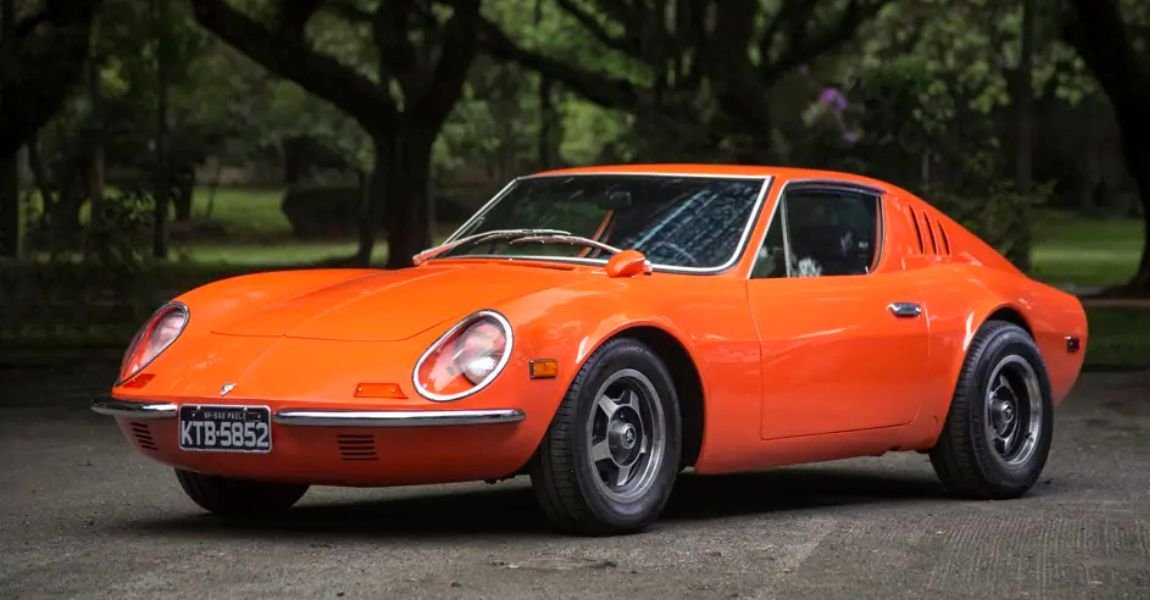
Between 1972 and 1976, Volkswagen do Brasil produced a fastback sports coupe called the SP2 that never reached export markets through official channels. The design team worked entirely without input from Wolfsburg headquarters, used components from the Beetle and the Variant, and delivered a silhouette elegant enough to pass for a commission from an Italian coach-builder. Jalopnik covers rare regional market vehicles, and few discoveries reward the attention as immediately as the VW SP2. The engineers at Volkswagen do Brasil solved the problem of producing an aspirational vehicle within the constraints of locally available parts, and the solution they reached was beautiful, characterful, and genuinely competitive in the Brazilian market of its era. The rest of the world simply never knew it existed.
VW SP2 Design: How Brazilian Engineers Created a Classic
The VW SP2 fastback roofline flows from a shallow A-pillar through a long flat greenhouse to a Kamm-tail design that manages aerodynamic separation cleanly at highway speeds. The recessed headlights sit behind a low, wide front treatment that gives the car a purposeful stance without the chrome excess defining most contemporary styling. The character line below the door glass creates visual tension in the side profile without requiring additional surface decoration. The minimal glass area produces an elegant coupe silhouette from every angle, particularly the three-quarter rear view, where the Kamm tail and raked rear glass combine to create a proportion that reads as European rather than Brazilian in origin.
VW SP2 Engine: Air-Cooled Flat-Four Powertrain Review
The SP2 received the 1.7 litre air-cooled flat four producing approximately 75 horsepower in Brazilian specification. Seventy-five horsepower sounds modest until you consider that the VW SP2 weighs under 900 kilograms. The power-to-weight ratio produces acceleration that the numbers do not predict, and the rear-engine, rear-wheel-drive layout gives the car a balance characteristic that rewards driver input rather than simply pointing at the corner exit and accelerating. Weight transfers rearward under braking and rebalances forward under acceleration, and the driver who learns to work with those forces finds the VW SP2 more engaging than any equivalent front-wheel-drive vehicle of its era could manage.
Air-cooled Volkswagen engines respond perfectly to the hands on oil change discipline of complete drainage and correct specification oil on schedule. The flat four shares its fundamental architecture with the Beetle engine that amateur mechanics worldwide maintained successfully for decades using basic tools and no dealer involvement. The electric fan cooling dynamics of an air-cooled engine operate on principles simple enough that any owner who reads the service manual understands the complete thermal management system without specialist training.
VW SP2 Production Numbers and Collector Market Scarcity
Total VW SP2 and SP1 combined production reached approximately total production of 10,205 units across four years. The vast majority remained in Brazil, where the tropical climate, demanding road surfaces, and decades of normal use reduced the survivor population substantially. Finding a VW SP2 in solid unrestored condition outside South America requires patience and access to specialist networks that most classic car buyers outside Brazil do not maintain. That scarcity drives the growing international collector interest as global awareness increases through auction appearances and specialist automotive journalism and car coverage.
Detailed technical specifications and production history are often used as reference material when evaluating purchase opportunities. The documentation covers both SP1 and SP2 specifications, production year differences, and correct configuration details that matter for authenticity verification.
VW SP2 International Collector Value and Market Pricing
Current asking prices for well-restored or strong original VW SP2 examples run between 25,000 and 55,000 US dollars, depending on condition, documentation, and configuration correctness. That range sits significantly below equivalent condition examples from Italian, French, and British sports coupes of the same era, despite the VW SP2’s comparable design quality and considerably greater rarity. The market has not yet priced in the scarcity and design achievement fully, which creates an opportunity for buyers who act on research rather than waiting for mainstream price guides to catch up with what informed collectors already know.
Available examples appear occasionally through specialist listings. The listing frequency reflects the scarcity: months pass between quality examples appearing, and the best sell quickly to buyers who have prepared due diligence in advance. The Jalopnik seller vetting guide provides a complete framework for confirming documentation and title cleanliness before committing to any classic car purchase that crosses borders.
VW SP2 vs European Sports Coupes of the Same Era
The VW SP2 achieved what it achieved without a generous engineering budget, without Wolfsburg input, and without a guaranteed export market. Volkswagen do Brasil created a beautiful sports coupe from parts bin components using creative design leadership and genuine engineering conviction. That combination of constraint and quality puts the VW SP2 in the same conceptual category as the Fiat Jolly and the Saab 900: vehicles that exceeded their circumstances because the people who built them cared more about the result than the limitation demanded. A comprehensive specification archive typically covers correct colour options and drivetrain specifications for every production year.
Official brand heritage documentation now acknowledges the SP2 as a significant chapter in the broader Volkswagen story, which represents formal recognition that the model’s quality has always deserved from the parent company.
Frequently Asked Questions
Why did Volkswagen not sell the SP2 in Europe or America?
The SP2 used air cooled technology and emission specifications calibrated for the Brazilian regulatory environment of the early 1970s. European and American emissions and safety regulations would have required significant engineering changes that the parts bin budget did not accommodate. Volkswagen do Brasil developed the car for their own market, and the commercial rationale for international homologation investment never materialised during the production run.
What is the VW SP2 top speed?
Period road tests recorded a top speed of approximately 155 kilometres per hour for the 1.7 litre SP2. The aerodynamic efficiency of the fastback body allowed the 75-horsepower engine to reach a top speed that the power output alone would not predict on a less slippery shape.
Are VW SP2 body panels available for restoration outside Brazil?
Body panels specific to the SP2 require sourcing from Brazilian specialists or fabrication by experienced metalworkers. Mechanical components shared with the Beetle and Variant remain globally available through the air cooled Volkswagen parts network. Buyers planning full restorations should source a second parts car in Brazil before beginning work to ensure panel availability throughout the project.
How does the VW SP2 compare to the Karmann Ghia as a collectable?
The Karmann Ghia offers stronger global parts support, a more established international collector community, and easier access to restoration specialists outside Brazil. The VW SP2 offers greater rarity, a more sophisticated fastback design, and stronger appreciation potential from its currently undervalued market position. Buyers with restoration resources and Brazilian parts network access gain more upside from the SP2 than from a Karmann Ghia at equivalent purchase prices today.