



1957 Chevrolet Bel Air: America’s Most Iconic Car

Some cars get remembered. Others become permanent fixtures in the cultural memory of an entire country. The 1957 Chevrolet Bel Air belongs to the second category and has never left it.
Walk past one at a car show and watch what happens. People stop. They take photographs. They tell stories. Children who were not alive when these cars were built somehow recognize them on sight. That kind of staying power does not come from marketing. It comes from a car that genuinely got everything right at exactly the right moment in American history.
This is the complete story of the 1957 Chevrolet Bel Air. Where it came from, what made it different, the engines that rewrote industry expectations, and what a real example costs in today’s collector market. Everything covered here connects to the broader world of classic and modern automotive coverage at jalopnik.net where the vehicles that shaped the industry get the attention they deserve.
How the Bel Air Reached 1957
The Bel Air name first appeared on a Chevrolet in 1950 as a trim designation on an existing hardtop body. By 1953, Chevrolet elevated it into a standalone model series and positioned it at the top of the passenger car lineup. That decision established Bel Air as the prestige nameplate. The configuration that received the best interior materials, the most chrome detailing, and the most visually aggressive styling available in any given model year.
In 1955, Chevrolet launched an entirely new body platform called the Tri-Five, covering model years 1955, 1956, and 1957. The same platform introduced the small-block V8 in a full-size Chevrolet. That engine went on to become one of the most produced, modified, and celebrated powerplants in the history of American manufacturing.
According to Wikipedia’s dedicated page on the Chevrolet Bel Air, the 1957 model represented the third and final year of the Tri-Five platform before a complete redesign arrived for 1958. The engineering and design teams knew they were working with their last opportunity to refine the body before the platform was retired. They made the most of it.
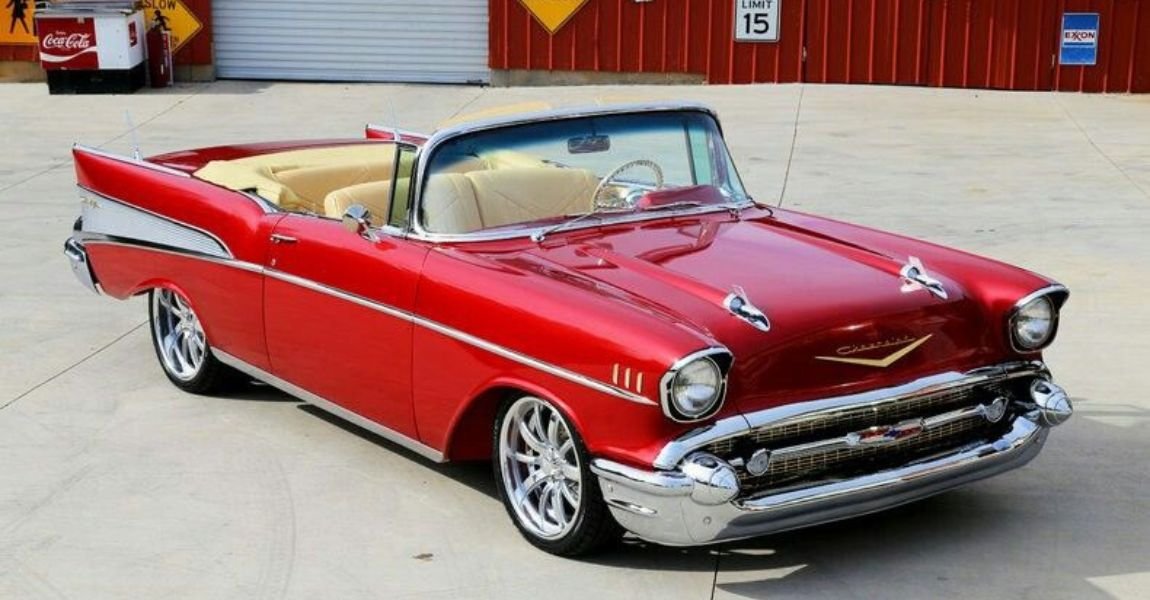
The 1957 model received a lower roofline, a wider grille, more aggressive tailfins drawn directly from jet aircraft design, and a completely reworked dashboard layout. What appeared to be a year-over-year evolution was actually a significant overhaul beneath the surface. Chevrolet delivered a car that felt genuinely new without abandoning the proportions that had won buyers over during the previous two model years.
The Design That Made It Iconic
The 1957 styling worked because it balanced aggression with proportion in a way that few American cars before or since have managed. The tailfins were sharp and purposeful rather than the cartoonish excess that came to define late-1950s design from several competing brands. The wide horizontal grille gave the front end a confident, planted stance that communicated performance before the driver touched the ignition.
Fifteen factory two-tone paint combinations let buyers personalize the car in ways that felt genuinely distinctive. Dealers reported that customers spent significant time at the order desk working through color pairings, which reflects how seriously buyers took the visual dimension of the purchase decision.
The Bel Air trim received anodized gold accents that no standard paint process could replicate at the time. The hood script, front fender chevrons, and grille insert all used aluminum treated through an electrochemical process that gave the trim a distinctive finish. The fuel filler cap hid behind the left rear tailfin, a small but memorable detail that became one of the most recognized design elements on the car.
According to Britannica’s coverage of American automotive design history, the styling decisions made by American manufacturers during the mid-1950s reflected a broader cultural confidence in the country’s industrial capacity and postwar economic momentum. The 1957 Bel Air captured that confidence more completely than almost anything else rolling on American roads that year.
The 1957 Bel Air came in seven body styles. A 2-door sedan, 4-door sedan, Sport Coupe hardtop, Sport Sedan hardtop, convertible, station wagon, and the Nomad, a 2-door wagon variant that has since become the rarest and most valuable configuration in the entire collector market.
The Engines That Rewrote the Rules
The engine lineup ranged from adequate to genuinely groundbreaking, depending on what the buyer selected from the order sheet. The base engine, a 235 cubic inch inline-six producing 140 horsepower, served fleet buyers and budget-focused customers without offering anything remarkable. Buyers who understood the full option list almost universally wanted the V8.
The 283 Small-Block V8
The 283 cubic inch V8 came in multiple states of tune that gave buyers a meaningful performance range at different price points. The base version with a 2-barrel carburetor produced 185 horsepower. A 4-barrel carburetor with dual exhaust brought the number to 220. The dual 4-barrel setup with a hydraulic camshaft borrowed from the Corvette program delivered 245 horsepower. The mechanical camshaft version of the same setup produced 270.Then came the configuration that changed everything.
The Fuel-Injected 283: One Horsepower Per Cubic Inch
The fuel-injected 283 produced exactly 283 horsepower from 283 cubic inches. One horsepower per cubic inch. That benchmark had never been achieved in a mass-produced passenger car before 1957. It rewrote expectations for what a production V8 could deliver and remains one of the most discussed engineering milestones in American automotive history.
The fuel injection option costs $484 on top of the base price. At a time when a base Bel Air sedan sold for $2,173, that represented a premium that relatively few buyers paid. The low production volume of fuel-injected examples is precisely why verified survivors command such extraordinary prices in today’s collector market.
Understanding how engineering milestones like this one affect long-term collector value connects directly to the broader picture of how classic and modern car values develop over time, where rarity and historical significance combine to drive pricing at major auction events.
Trim Levels and How the Lineup Worked
The 1957 model year organized buyers into three distinct series, each targeting a different price point and buyer profile with a clear hierarchy of content and visual distinction.
One-Fifty
The One-Fifty served as the base series with minimal trim, four body styles, and little chrome. Chevrolet aimed this configuration at commercial buyers and fleet operators who prioritized acquisition cost over visual impact.
Two-Ten
The Two-Ten occupied the middle ground with eight body styles and a Del Ray sub-trim that added meaningful interior upgrades for buyers wanting more than the base offering without committing to full Bel Air pricing.
Bel Air
The Bel Air held the top position with seven body styles, the complete gold trim package, richer upholstery options, and every visual detail that made the 57 the car collectors pursue most actively today.
The Nomad wagon sat within the Bel Air series and used a unique two-door body that combined genuine cargo utility with the visual language of the Sport Coupe hardtop. Production numbers stayed low across all three years of the Nomad’s production run, and that combination of rarity and visual integrity has made it the single most sought-after variant in the Tri-Five collector market.
Production Numbers and Survival Rates
Approximately 1,505,910 vehicles left Chevrolet factories across all models during the 1957 model year. Roughly 702,220 carried the Bel Air badge. That production volume sounds substantial until you account for what seven decades of rust, accidents, poor storage, and parts-car attrition do to any given run of vehicles.
The convertible saw approximately 47,000 units produced, a fraction of total output. That rarity explains why convertibles consistently bring the highest prices at auction outside of fuel-injected variants and Nomad wagons. Rarity in the collector car market functions as a product of original production volume multiplied by survival rate, and both factors work against the convertible buyer looking for a straightforward deal.
According to Statista’s collector vehicle market analysis, pre-1960 American vehicles represent one of the most stable appreciating categories in the global collector car space, with demand remaining consistent across economic cycles in ways that later model years have not always managed to replicate.
For buyers thinking about the long-term value picture, the analysis of where the automotive market is heading in 2026 provides useful context on how shifting consumer preferences and market forces affect which vehicles hold value and which ones appreciate over extended ownership periods.
Original Pricing in Context
The base Bel Air 2-door sedan started at $2,173 in 1957. The convertible came in around $2,500. Adding the fuel injection system costs $484. The Powerglide automatic transmission and the new Turboglide triple-turbine automatic that debuted that year both added to the final transaction price. A fully optioned Bel Air convertible with fuel injection pushed well past $2,900.
The average American household income in 1957 sat at roughly $4,900 per year. A top-specification Bel Air convertible cost more than half of what most American families earn over an entire year. The performance options were genuinely aspirational purchases, and relatively few buyers committed to them. That restraint at the point of sale is exactly why those examples generate such intense competition among collectors today.
What a 1957 Bel Air Costs in 2026
The collector market for 1957 Bel Airs has held strong and appreciated meaningfully over the past decade. Values break down broadly along condition lines.
Driver Quality
Driver quality examples with some wear and partial restoration work bring between $23,000 and $38,000, depending on body style and powertrain configuration.
Restored Examples
Solid restored examples with correct colors and good mechanical presentation sell in the $46,000 to $80,000 range.
Concours Quality
Concours quality convertibles and fuel-injected examples with complete nut-and-bolt restorations regularly exceed $90,000 and reach past $150,000 for the most thoroughly documented cars.
Nomad wagons and verified fuel-injected examples regularly exceed these ranges at major auction events. Values shift meaningfully based on documentation quality, color correctness, and whether the drivetrain numbers match the original broadcast sheet. A car with a complete paperwork trail commands a genuine premium over an otherwise identical example that cannot verify its history.
For buyers navigating private party transactions in the classic car space, the guidance on buying a used car safely and verifying the seller covers the steps that matter before any significant automotive transaction, and those steps matter even more when the purchase price reaches collector territory.
Why the 57 Bel Air Still Carries Cultural Weight
Dismissing the continued cultural presence of the 1957 Bel Air as simple nostalgia misses what the car actually represents in the broader history of American manufacturing and industrial design.
It was the first mass-produced passenger car to achieve one horsepower per cubic inch in factory form. It outstyled every direct competitor during its model year. It competed against Ford’s strongest offerings and won on design. It accomplished all of this in a single model year before the entire platform was retired and replaced with something heavier and less focused for 1958.
According to History.com’s coverage of postwar American industrial culture, the period between 1955 and 1960 represented the peak expression of American manufacturing confidence, a moment when domestic industry produced goods that combined genuine engineering ambition with popular accessibility in ways that proved difficult to sustain into the following decade.
The 1957 Bel Air sits at the center of that moment. It was built for ordinary buyers, produced in large numbers, and yet it managed to look and feel genuinely extraordinary. Achieving that balance is considerably harder than it appears in retrospect. The automotive industry only managed it this completely once.
For anyone who wants to follow both the historical context and the current forces shaping the automotive market, Jalopnik News connects classic automotive achievements to the cars being engineered and sold today. Understanding why the 1957 Bel Air still matters also clarifies what Jalopnik covers and why automotive history sits at the center of serious car journalism rather than at the margins.
Frequently Asked Questions
How many 1957 Chevrolet Bel Airs still exist?
No official count exists, but estimates place surviving examples somewhere between 20,000 and 50,000 in various conditions out of the original 702,220 produced. Numbers vary significantly by body style, with convertibles and Nomad wagons representing the rarest survivors in the collector market.
What is the most valuable 1957 Bel Air configuration?
The fuel-injected convertible with the 283-horsepower Ramjet engine, correct factory documentation, and a verifiable ownership history commands the highest prices. Show-quality examples of this combination have sold for well over $200,000 at major auctions. The Nomad wagon in concours condition also competes at the upper end of the market.
Was the 1957 Bel Air fast by modern standards?
Not by today’s metrics. The fuel-injected 283 ran 0 to 60 mph in roughly 8 seconds, which falls well short of most modern family sedans. For 1957, that performance was genuinely impressive in a production passenger car, and the engine character and sound remain compelling regardless of contemporary comparisons.
Why did the 1957 body style only last one year?
The 1957 body was the third and final year of the Tri-Five platform introduced in 1955. A full redesign had already been committed for 1958. The 1957 was not discontinued because it failed. It reached the planned end of its product cycle and was replaced on schedule.
What should I inspect when buying a 1957 Bel Air?
Focus on three areas. Frame condition, since rust in the frame is expensive to repair correctly. Documentation, including the broadcast sheet, original title history, and matching numbers on the drivetrain. Body panel alignment, which reveals whether the car has had significant collision repair at any point in its history. A pre-purchase inspection by a Tri-Five specialist is worth the cost before any serious transaction.
Is the 1957 Bel Air a sound collector investment?
Quality examples have appreciated consistently over the past two decades, and collector demand remains strong across economic cycles. Values depend heavily on condition, documentation quality, and broader market conditions. Buying purely for financial return carries real risk. Buying because you want to own a piece of American automotive history with a reasonable expectation that it holds or grows in value is the more realistic and satisfying approach to the market.


4 Comments
[…] and delivered a silhouette elegant enough to pass for a commission from an Italian coach-builder. Jalopnik covers rare regional market vehicles, and few discoveries reward the attention as immediately as the VW […]
[…] collector attention that used to focus almost exclusively on larger and technically more complex classic European and American cars and the Fiat Jolly benefits directly from that broadening of collector interest.Listings for […]
[…] historically significant vehicles appear regularly, from the beloved Saab 900 to the 1957 Chevrolet Bel Air, alongside practical car buying advice and detailed buyer […]
[…] and hitting 60 mph from standstill in around 9.8 seconds, remarkable for the era. Cars like the 1957 Chevrolet Bel Air also played a role in shaping early American performance […]
Comments are closed.