
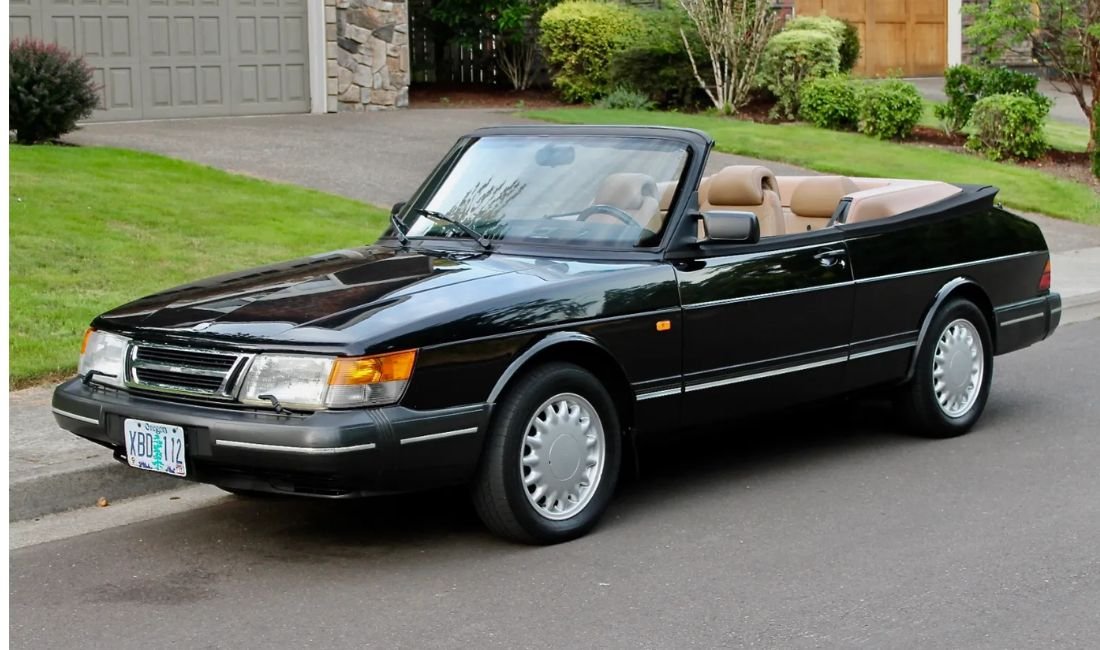
Sweden gave the world ABBA, IKEA, and one of the most unconventional cars ever built in a mainstream factory. The Saab 900 was not designed by people who read the automotive rulebook. It was designed by engineers who came from aerospace, worked in a city called Trollhättan, and genuinely believed a car should protect its occupants first and impress bystanders second.
It ran from 1978 to 1998 across two very different generations. It sold over 900,000 units globally. And decades after the last one rolled off the line, people still drive them, restore them, and argue passionately about which variant was the best.
A Brief History of Saab and the 900
The classic Saab 900, produced from 1978 to 1994, came from a company that built military jet aircraft before it built cars.
Saab started as an aircraft manufacturer in 1937. When World War II ended and the defence contracts dried up, the company needed a new product. They built their first car in 1947, and the DNA from the aircraft division never fully left.
The original Saab 92 was aerodynamically shaped because that is what the engineers knew. By the time the 900 arrived in 1978, that thinking had evolved into something genuinely distinctive. It was a front-wheel drive car with a long hood, a steeply raked windshield that wrapped around the cabin, and safety features that most manufacturers would not standardize for another decade.
The timing mattered too. The 1970s oil crisis made turbocharged engines relevant to mainstream buyers for the first time. Saab was already working on turbo technology, and the 900 Turbo launched in 1978 made them one of the first manufacturers to offer a turbocharged car to everyday buyers.
Two Generations
The 900 ran in two distinct phases, and they are quite different cars despite sharing a name.
| Generation | Years | Platform | Key Change |
| Classic 900 | 1978 – 1994 | Saab 99 derived | Original design, pure Saab engineering |
| NG900 (New Generation) | 1994 – 1998 | GM Epsilon (Opel Vectra) | GM acquisition influence, more modern |
The classic generation is what most enthusiasts mean when they say Saab 900. It used a platform derived from the older Saab 99, with a front-mounted transverse engine where the gearbox sat below the engine. It was an unusual layout, it worked well, and it lasted 16 years.
The NG900 arrived after General Motors acquired Saab in 1990. It moved to a shared GM platform, which brought more modern engineering and better reliability but lost some of the original character. Purists notice the difference immediately.
What Made It Different
Most cars in the late 1970s and 1980s were fairly conventional. The 900 was not.
The windshield. The wraparound windshield on the classic 900 was enormous. It gave the car a panoramic front view that nothing else in the segment offered. It also contributed to a low drag coefficient, which the aerospace engineers cared about deeply.
The ignition between the seats. Saab placed the ignition switch on the center console, between the front seats and ahead of the gear lever. The reason was practical. In a frontal collision, a driver’s knee hitting a key in the steering column is a real injury risk. So they moved it. That detail alone tells you a lot about how these engineers approached problems.
The driver-focused cockpit. The dashboard wrapped toward the driver. Every control was positioned with the driver’s reach in mind. The interior felt deliberate in a way that many cars from that era simply did not.
The hatchback body. The 900 came as a three-door hatchback, five-door hatchback, and eventually a convertible. The hatchback configuration gave it genuinely usable cargo space without adding the length of a sedan.
The Turbo That Changed Things
The 900 Turbo deserves its own section because it had a significant effect on the industry.
When Saab launched it in 1978, turbocharged passenger cars existed but they were rare, expensive, and mostly associated with performance niches. Saab positioned the 900 Turbo as a practical, premium daily driver that happened to produce serious power. That framing was new.
| Variant | Engine | Power | Torque | 0-100 km/h |
| 900 Base (1978) | 2.0L i4 | 100 PS | 160 Nm | ~12 sec |
| 900 Turbo (1978) | 2.0L Turbo i4 | 145 PS | 226 Nm | ~9 sec |
| 900 Turbo 16v (1984) | 2.0L 16v Turbo | 175 PS | 274 Nm | ~8 sec |
| 900 Turbo S (1991) | 2.1L Turbo | 185 PS | 280 Nm | ~7.5 sec |
The power numbers look modest today. In 1978, 145 PS from a family car was genuinely fast. The torque delivery through the turbo made city driving feel effortless in a way that naturally aspirated cars of the same era could not match.
Other manufacturers noticed. The success of the 900 Turbo demonstrated that everyday buyers would pay for turbocharged performance if it came packaged in a sensible, comfortable car. That lesson influenced product decisions across the industry through the 1980s and beyond.
What It Is Like to Drive
The classic 900 has a character that modern cars have largely engineered out of existence.
The steering is direct and communicative. You feel the road through it in a way that contemporary electric power steering systems muffle. The gearshift has weight and mechanical feedback. The body roll through corners is present but predictable. The car tells you exactly what it is doing.
The turbocharged variants have a distinctive power delivery. There is a noticeable pause before the turbo spools, then a surge of torque that pushes you back in the seat. This turbo lag was more pronounced in the early cars and reduced significantly in the 16-valve engines from 1984 onward.
The seats deserve a mention. Saab designed them with ergonomics as a priority, drawing on research that the aerospace division had already done for pilot seating. Long-distance driving in a 900 is genuinely comfortable in a way that the competition from the same era often was not.
Today, driving one requires patience. Parts availability varies. Older cars need maintenance and attention. But people who own them report that the driving experience is worth the effort.
Specs and Models at a Glance
Body Styles
| Body | Years Available | Doors |
| 3-door hatchback | 1978 – 1994 | 3 |
| 5-door hatchback | 1979 – 1994 | 5 |
| Convertible | 1986 – 1994 | 2 (soft top) |
| NG900 Coupe | 1994 – 1998 | 3 |
| NG900 Convertible | 1994 – 1998 | 2 (soft top) |
Engine Options (Classic Generation)
| Engine | Displacement | Type | Years |
| B201 | 2.0L | Naturally aspirated | 1978 – 1985 |
| B202 | 2.0L Turbo | Turbocharged | 1978 – 1993 |
| B212 | 2.1L | Naturally aspirated / Turbo | 1990 – 1994 |
| B234 | 2.3L 16v | Naturally aspirated | 1990 – 1994 |
The convertible model launched in 1986 became the 900’s most recognized body style internationally. It was designed and initially built by American Sunroof Corporation in the United States and gave the car a completely different personality from the practical hatchback. Prices for good convertible examples have risen steadily over the past decade.
Owning One Today
The Saab 900 sits in an interesting position in the classic car market. It is not yet expensive enough to be out of reach for enthusiasts, but values on good examples, especially convertibles and late Turbo variants, have climbed noticeably since 2015.
| Variant | Condition | Approximate Value (USD) |
| Approximate Value (USD) | Driver quality | $3,000 – $7,000 |
| Classic 900 hatchback | Excellent / restored | $10,000 – $18,000 |
| Classic 900 Convertible | Driver quality | $7,000 – $14,000 |
| Classic 900 Convertible | Excellent | $18,000 – $35,000+ |
| 900 Turbo | Driver quality | Driver quality |
| NG900 | Driver quality | Driver quality |
Parts are available through specialist suppliers, though some items require patience to source. The Saab enthusiast community is active and genuinely helpful. Forums and owner groups have accumulated decades of practical knowledge on maintenance, restoration, and sourcing parts.
Common things to check before buying: rust on the floorpan and sills on classic models, turbo reliability on high-mileage cars, and the condition of the convertible top on open-top variants.
Pros and Cons
Pros
Distinctive design that still turns heads today
The Turbo variants deliver a driving experience unlike anything in the modern market
Strong community support and specialist knowledge base
Convertible values have appreciated steadily
The aerospace-influenced ergonomics make long drives remarkably comfortable
Front-wheel drive layout keeps handling predictable and manageable
Cons
Classic models are prone to rust, particularly on floorpans and rear arches
Some parts require specialist sourcing
Early Turbo variants have noticeable lag that takes adjustment for modern drivers
The NG900 sacrificed character for reliability
Finding a qualified mechanic who knows these cars takes effort
Fuel economy on the Turbo models is not impressive by modern standards
Frequently Asked Questions
Is the Saab 900 reliable?
The naturally aspirated models are generally reliable if maintained properly. The Turbo variants need more attention. Turbocharged engines of that era require regular oil changes and proper warm-up and cool-down periods. The NG900 is considered more reliable overall because it used more modern components, though enthusiasts find it less engaging to drive.
What engine does the Saab 900 have?
The classic 900 used a family of 2.0L and 2.1L four-cylinder engines, available in naturally aspirated and turbocharged forms. A 2.3L 16-valve engine was also offered in later classic models. The NG900 moved to a different engine family after the GM acquisition.
How much does a Saab 900 cost today?
A driver-quality classic hatchback starts around $3,000 to $7,000. Convertibles in good condition command $18,000 to $35,000 or more depending on condition and specification. Values have risen over the past decade as the classic car market recognized the significance of the model.
Is the Saab 900 Turbo fast?
By modern standards, no. By the standards of its era, yes. The 16-valve version from 1984 pushed 175 PS and hit 100 km/h in around 8 seconds. The character of the power delivery makes it feel more engaging than the raw numbers suggest.
Why did Saab stop making the 900?
The 900 name was retired in 1998 when Saab replaced it with the 9-3. The original classic 900 ended production in 1994 when the NG900 replaced it. Saab as a company collapsed later. GM sold it in 2010 and Saab Automobile declared bankruptcy in 2011.
Is the Saab 900 a good first classic car?
It can be, with realistic expectations. Entry prices are reasonable, the community is supportive, and naturally aspirated models are not complicated to maintain. The bigger challenge is finding a rust-free example and a mechanic with Saab experience. If you do the research before buying, it is a rewarding first classic.
Conclusion
The Saab 900 was never meant to be just another car on the road. From the beginning, it reflected a different way of thinking, shaped by engineers who cared more about safety, function, and the driver’s experience than following industry trends.
Everything about it feels intentional. The unusual ignition placement, the wraparound windshield, the early use of turbocharging in a practical car, all of it came from solving real problems rather than chasing style. That is what gives the 900 its lasting identity.
Driving one today is not about speed or modern convenience. It is about feel. The connection to the road, the way the turbo builds power, and the comfort over long distances all remind you that this car was designed with people in mind.
Owning a Saab 900 does require effort. Finding a good example, maintaining it properly, and sourcing parts can take time. But for those who appreciate what it represents, that effort becomes part of the experience.
Even decades after production ended, the Saab 900 continues to stand out. Not because it tried to be different, but because it simply was.

Pingback: Volvo 240: Swedish Tank That Lasted Years
Pingback: What Is Jalopnik?
Pingback: Fiat Jolly: Rare Beach Car for Collectors
Pingback: Saab 900 Turbo: The Car Popularized Turbocharging
Pingback: Toyota Maintenance Required Light: Complete Guide ,Reset & Fix