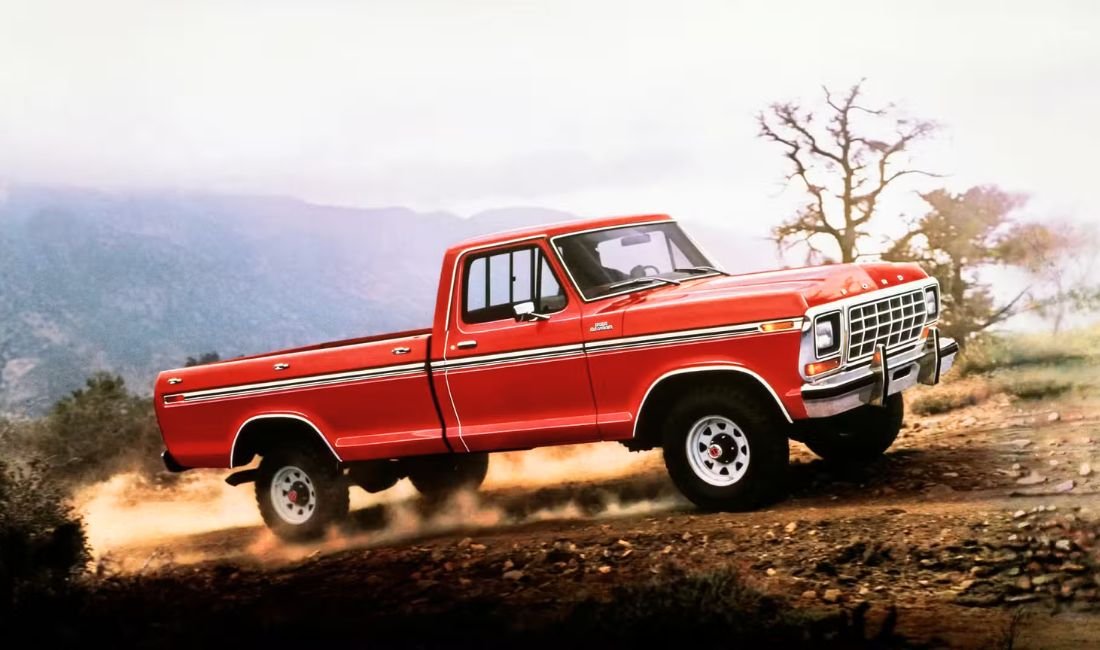
America built a lot of trucks in the 20th century. Ford built the ones people still talk about. Old Ford trucks occupy a unique place in automotive history, not because of clever marketing, but because they were genuinely hard to kill. Farmers ran them until the sheet metal gave out. Ranchers passed them down to their kids. Weekend restorers pull them out of fields today, and with a little work, they run again.
If you’re new to automotive media, you can start with what is Jalopnik to understand the platform behind these stories.
This article covers the full story, from the early postwar models that defined what a work truck should be, through the classic F-Series generations that made Ford the best-selling truck brand in America, to what owning one actually costs and involves today.
A Brief History
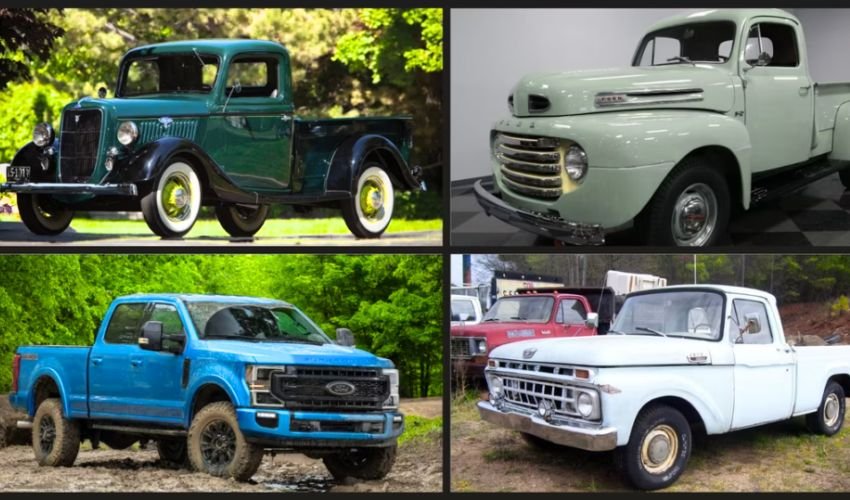
Ford has been building trucks since 1917, but the modern story really starts in 1948. That is when Ford introduced the F-Series, a purpose-built truck lineup that replaced the earlier adapted-car-chassis designs. The F-Series was designed from the ground up to haul, tow, and work. It had a proper ladder frame, an upright cab built for visibility and access, and a range of payload ratings from half-ton to one-ton.
The F-Series did not just succeed. It became the best-selling vehicle in the United States, a title it has held every single year since 1981. But the trucks that collectors and enthusiasts care most about predate that dominance. The first, second, and third generation F-Series trucks, built between 1948 and 1966, represent a period when Ford was figuring out what a modern truck should look like. They got it right faster than most people realize.For comparison, modern vehicles like the Honda City Hatchback 2026 review show how far comfort and technology have evolved.
The 1967 introduction of the Bumpside fourth generation marked a turning point toward comfort without abandoning capability. By the time the fifth generation arrived in 1973 and ran through 1979, Ford had a truck that could genuinely serve as a daily driver while still doing real work on weekends.
Key Generations
Just like niche classics such as the Fiat Jolly rare beach car, each generation has its own unique appeal.
| Generation | Years | Nickname | What Defined It |
| First Gen F-Series | 1948 – 1952 | Bonus Built | First purpose-built Ford truck, flat windshield |
| Second Gen F-Series | 1953 – 1956 | Wraparound windshield, more refined cab | |
| Third Gen F-Series | 1957 – 1960 | Lower, wider stance, twin I-beam front suspension | |
| Fourth Gen F-Series | 1961 – 1966 | Unibody / Styleside | Unibody option introduced, cleaner lines |
| Fifth Gen F-Series | 1967 – 1972 | Bumpside | Longer cab, more interior room, Twin I-Beam refined |
| Sixth Gen F-Series | 1973 – 1979 | Highboy / Dentside | Square body, four-wheel drive popularity grows |
| Seventh Gen F-Series | 1980 – 1986 | Bullnose | Aerodynamic updates, fuel injection arrives |
Each generation has its own following. The 1967 to 1972 Bumpside and the 1973 to 1979 Dentside are the two most sought-after by restorers today, primarily because parts availability is strong and the styling holds up exceptionally well.
What Made Them Different
Old Ford trucks were not particularly innovative in the way that a luxury car from the same era might be. What made them stand out was execution. Ford built trucks that worked reliably in genuinely difficult conditions, and they did it consistently across decades.
Twin I-Beam front suspension. Ford introduced this in 1965, and it became a defining feature of their trucks for decades. Two independent I-beams gave each front wheel its own range of motion rather than linking them on a solid axle. The result was a better ride without sacrificing the load capacity and durability that truck buyers demanded. Competitors took years to respond.
The FE engine family. Ford’s FE-series big-block V8 engines, introduced in 1958, gave truck buyers serious power at a time when the competition was still offering inline sixes as the default choice. A 390 FE in a 1967 F-100 felt completely different from anything else in the segment.
Cab design. The cabs on 1960s and 1970s Ford trucks were designed with working people in mind. The seating position gave good visibility over the hood. The door openings were wide. Controls were where your hands naturally reached. There was nothing fancy about it, but everything was in the right place.
Simplicity. Old Ford trucks are mechanically straightforward. A 1969 F-100 with a carburetor and points ignition can be diagnosed and repaired with basic tools and a factory service manual. That is not a small thing when you are 40 miles from the nearest parts store.
Many owners today also upgrade cooling systems with an electric fan for cars for better reliability.
Most Popular Models and What They’re Worth
| Model | Years | Why Collectors Want It | Market Range (USD) |
| F-100 Bumpside | 1967 – 1972 | Clean styling, strong parts support | $8,000 – $45,000+ |
| F-100 Dentside | 1973 – 1979 | Square body, easy to modify | $6,000 – $35,000 |
| F-100 First Gen | 1948 – 1952 | Rarity, historical significance | $15,000 – $60,000+ |
| Bronco (Early) | 1966 – 1977 | Four-wheel drive icon, surging values | $30,000 – $100,000+ |
| Ranchero | 1957 – 1979 | Car-based pickup, unique segment | $5,000 – $25,000 |
| F-250 Highboy 4×4 | 1967 – 1977 | High ground clearance, serious off-road | $15,000 – $55,000+ |
The early Bronco deserves a special mention, especially when looking at first-generation Ford Bronco values.. Values on first-generation Broncos have increased faster than almost any other American classic truck over the past decade. A clean, unmodified example that sold for $12,000 in 2010 routinely brings $60,000 or more today.
What They Are Like to Drive
Nobody buys an old Ford truck because it is fast or comfortable by modern standards. They buy it because driving one feels fundamentally different from anything built in the last 30 years, and that difference is addictive.
The steering is slow and vague compared to modern trucks. You turn the wheel more than you expect to, and you feel the road through the whole front end rather than through a filtered power steering rack. On a straight highway it settles into a comfortable cruise. In town, parking requires planning.
The ride depends heavily on what is in the bed. An empty F-100 bounces over rough roads because the rear suspension is tuned to carry load. Put a few hundred pounds in the back and everything smooths out considerably. This is working truck geometry, not commuter car geometry.
The engines, particularly the FE big blocks and the later 360 and 390 cubic inch units, pull strongly from low rpm. There is no turbo spool, no lag, no power curve to manage. You press the accelerator and the truck moves.
What surprises most people who drive one for the first time is how capable they feel. These trucks were built to actual work standards, not marketing specifications. The frame is heavy, the axles are beefy, and the whole thing feels like it could genuinely haul something.
Engines and Key Specs
Common Engine Options Across Classic Generations
| Engine | Displacement | Type | Era | Notes |
| Mileage Maker Six | 223 cu in | Inline 6 | 1952 – 1964 | Reliable, economical workhorse |
| Y-Block V8 | 239 – 292 cu in | V8 | 1954 – 1964 | Ford’s first modern OHV V8 |
| FE Big Block | 352 – 390 cu in | V8 | 1958 – 1976 | Strong torque, popular with restorers |
| 300 Six | 300 cu in | Inline 6 | 1965 – 1996 | One of the most reliable engines Ford ever built |
| 360 / 390 FT | 360 – 390 cu in | V8 | 1968 – 1976 | Truck-specific FE variant, high torque |
| 351 Windsor / Cleveland | 351 cu in | V8 | 1969 – 1979 | Balanced performance and reliability |
| 400M | 400 cu in | V8 | 1971 – 1979 | Large displacement, suited to heavy towing |
The Ford 300 inline six deserves its own mention. Introduced in 1965 and produced until 1996, it is widely considered one of the most durable, reliable truck engines ever built. It produces modest power by V8 standards but it runs forever with basic maintenance, parts are everywhere, and rebuilding one is straightforward even for a beginner.
Payload and Towing (Typical 1967-1979 F-Series)
| Model | Payload Rating | Typical GVW | Frame Type |
| F-100 | 1,000 lb | 4,600 – 5,000 lb | Light-duty ladder |
| F-250 | 1,500 – 2,000 lb | 6,200 – 7,500 lb | Medium-duty ladder |
| F-350 | 2,500 – 3,000 lb | 8,500 – 10,000 lb | Heavy-duty ladder |
Owning One Today
Buying an old Ford truck is not like buying a modern vehicle. There is no report that tells you everything. Rust, previous repairs, and decades of maintenance decisions all matter, and none of them are immediately visible at first glance.
What to look for before buying
Rust is the primary concern on any classic truck. Focus on the cab corners, the floor pans, the frame rails behind the rear axle, and the lower door skins. Surface rust on body panels is manageable. Structural rust on the frame or floor is a different and much more expensive problem.
Check the frame for cracks, especially around the crossmembers and any previous weld repairs. Start the engine cold if possible. A good engine starts easily, idles steadily, and does not produce blue smoke on startup.
Approximate Ownership Costs
| Item | Estimated Cost (USD) |
| Basic service (oil, filters, fluids) | $80 – $150 |
| Carburetor rebuild | $150 – $400 |
| Brake job (front and rear) | $300 – $600 |
| Full engine rebuild (DIY parts) | $1,500 – $4,000 |
| Professional resto-mod build | $25,000 – $80,000+ |
| Annual insurance (agreed value policy) | $400 – $900 |
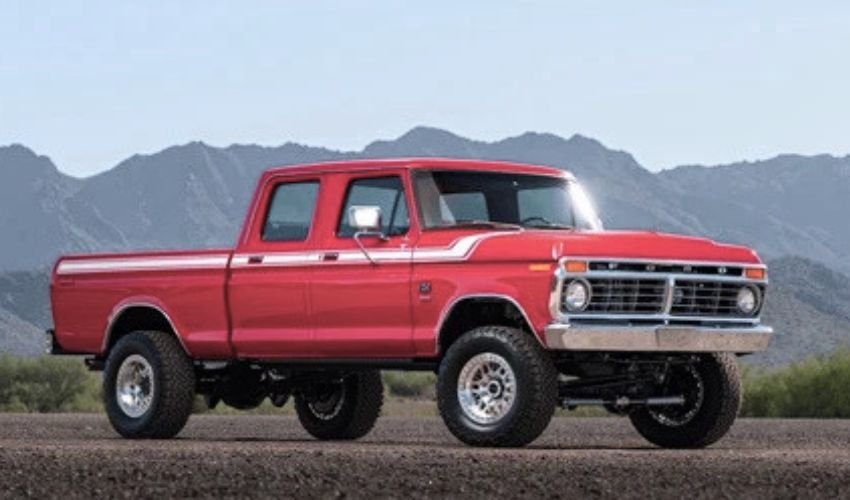
Parts availability for the 1967 to 1979 trucks is genuinely excellent. Companies specializing in classic Ford parts stock nearly everything from weatherstripping to complete body panels. This makes the Bumpside and Dentside generations particularly attractive for first-time restorers. Tools like an LTO tracker can also help manage registration and documentation, depending on your region.
Frequently Asked Questions
What years are considered old Ford trucks?
Most collectors and enthusiasts use the term to cover trucks built from 1948, when the modern F-Series began, through approximately 1979. Some extend it to include the 1980 to 1986 Bullnose generation. Anything before 1980 is generally considered a classic, with the 1967 to 1979 trucks being the most actively traded in the current market.
Which old Ford truck is the most reliable?
The trucks equipped with the Ford 300 cubic inch inline six engine, produced from 1965 to 1996, are widely regarded as the most reliable. The engine is simple, durable, and well documented. Among complete trucks, the 1973 to 1979 F-Series generation tends to offer the best balance of reliability, parts availability, and usability as a daily driver.
How much does a good old Ford truck cost?
A driver-quality 1967 to 1972 F-100 in running condition starts around $8,000 to $12,000. A clean, rust-free example with a good drivetrain runs $20,000 to $35,000. Fully restored or professionally built trucks regularly exceed $50,000. Early Broncos sit in a different market entirely, with quality examples starting around $40,000 and climbing well above $100,000 for pristine unmodified trucks.
Are old Ford trucks good daily drivers?
They can be, with realistic expectations. The 1973 to 1979 trucks are the most practical choice for regular use because parts are plentiful, the cab is reasonably comfortable, and the drivetrains are well understood. You will deal with worse fuel economy, no modern safety systems, and more maintenance attention than a modern vehicle requires. Many owners find the trade-offs worth it.
What is a Highboy Ford truck?
A Highboy refers to the 1967 to 1977 F-250 four-wheel drive trucks that retained the tall, original frame height rather than using a lowered frame with a front axle drop. The result is significant ground clearance straight from the factory, roughly 10 inches under the front differential. Highboys are highly sought after for their off-road capability and have seen significant value increases over the past decade.
What should I check when buying an old Ford truck?
Focus on rust first, specifically the frame rails, cab corners, floor pans, and lower door skins. Then check for a straight frame with no cracks or previous weld repairs. Start the engine cold and listen for smooth idle and no blue smoke. Check that the transmission shifts cleanly through all gears. Finally, look underneath for evidence of leaks, damaged brake lines, and worn steering components. A pre-purchase inspection from a mechanic familiar with classic trucks is worth every dollar.
Conclusion
Old Ford trucks earned their reputation the hard way. They worked for decades in real conditions, survived rough use, and proved their value long before anyone called them classics. That history is exactly why they still matter today.
Whether you are looking at a Bumpside, a Dentside, or even an early Bronco, the appeal goes beyond styling or nostalgia. These trucks are simple, durable, and still capable of doing real work. You can maintain them yourself, find parts without much trouble, and drive something that feels completely different from anything modern.
Owning one is not about convenience. It is about connection. You feel the road, the engine, and the mechanical side of driving in a way that modern vehicles no longer offer. For many people, that experience alone makes the extra effort worthwhile.
If you choose the right truck and go in with realistic expectations, an old Ford will not just sit in your garage. It will start, run, and keep doing exactly what it was built to do.