
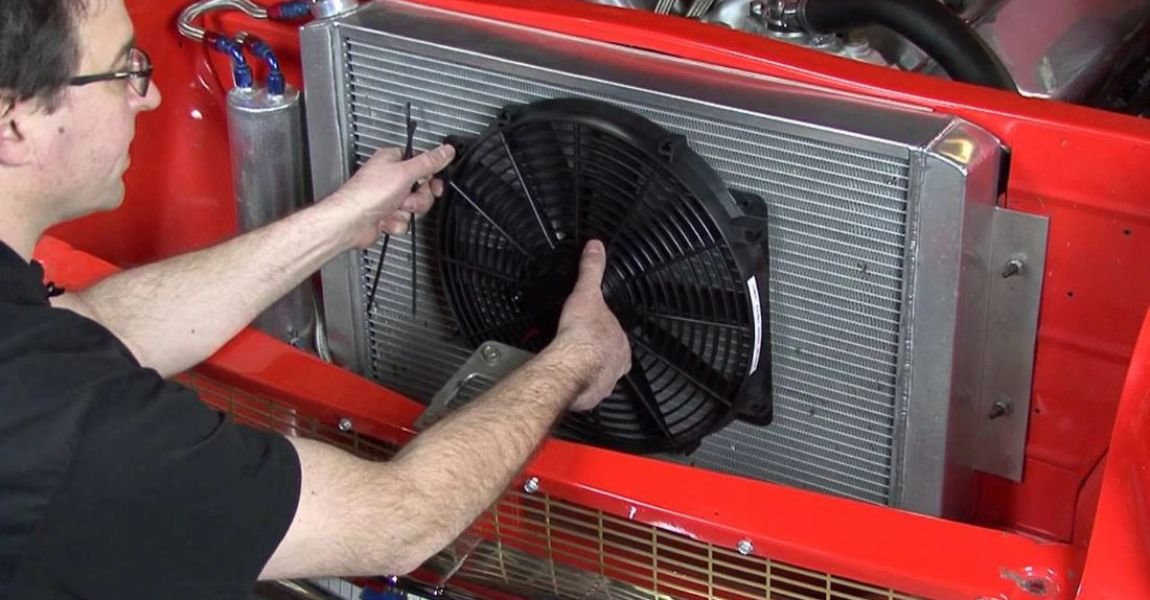
What Is a Car Electric Fan and Why Does It Matter
Most drivers never think about their electric fan until the temperature gauge creeps into the red at a traffic light and the repair estimate arrives shortly thereafter. By that point, the damage has often already started. Jalopnik has documented dozens of scenarios where a single failed electric fan converted a routine city commute into a tow truck call and a repair bill that the owner never saw coming. The electric fan manages coolant temperature the moment the vehicle slows below the speed where ram airflow through the radiator does the job independently. Remove that fan from the cooling equation, and the engine has no active thermal defence at low speed or at idle.
Electric Fan vs Mechanical Fan: Key Differences Explained
Belt-driven fans stole real horsepower from the crankshaft every time the engine ran, regardless of whether the radiator needed cooling. The electric fan ended that waste by activating only when coolant temperature climbs past the calibrated activation threshold, typically between 85 and 100 degrees Celsius, depending on the vehicle specification. Below that threshold, the motor draws zero power and creates no parasitic drag on the engine. The Society of Automotive Engineers published research confirming that switching from mechanical to electric cooling fans reduces parasitic power loss by up to 5 horsepower on four-cylinder engines and up to 9 horsepower on larger V8 applications.
Puller vs Pusher Electric Fan: Which Type Do You Need
A puller electric fan mounts on the engine side of the radiator and draws air through the core from the outside towards the engine bay. This delivers the highest airflow efficiency because the fan operates in undisturbed air with a clean pressure differential across the radiator. A pusher electric fan mounts on the front face of the radiator and pushes ambient air through the core from the outside. Pusher units suit towing vehicles, high-output engines, and trucks that generate heat loads beyond what the factory puller unit handles alone. Many performance builds run both configurations simultaneously to double the cooling capacity without replacing the radiator.
Symptoms of a Failed Electric Fan in Your Car
An engine that runs perfectly at highway speed in most cars but overheats at idle or in slow traffic carries the clearest electric fan failure signature in automotive diagnostics. Highway speed generates ram air through the grille and radiator that compensates even for a completely dead fan motor. Drop to walking speed in summer traffic, and that ram air disappears. With a dead electric fan motor, the coolant temperature rises unchecked within minutes. Other diagnostic indicators include the air conditioning system losing cooling performance because the condenser shares the electric fan circuit on most modern vehicles, the fan running without stopping because the temperature sensor or relay is stuck closed, and grinding or squealing from motor bearings when the fan does run.
Professional technicians pull vehicle-specific wiring diagrams from ALLDATA repair documentation to trace the complete electric fan circuit from the fuse through the relay and temperature sensor to the motor. Guessing at the fault without the diagram leads to replacing good components while the actual problem sits in a corroded connector or a failed ten-dollar relay.
How to Choose the Right Aftermarket Electric Fan CFM Rating
CFM measures the airflow volume that the motor and blade assembly moves through the radiator core. A standard compact sedan needs between 1200 and 1800 CFM. A turbocharged performance build running elevated temperatures on track days needs 2500 CFM or more. Match the CFM rating to your cooling system requirement rather than buying the highest-rated unit on the shelf. An oversized electric fan on a mild daily driver creates turbulence patterns that reduce effective airflow through the radiator core despite moving more total air volume.
Electric Fan Wiring and Relay Setup for Safe Installation
An electric fan motor draws between 15 and 30 amps, depending on size and CFM rating. Running that current through undersized wiring creates heat, voltage drop, and, eventually, a melted connector or a fire risk. Always wire the motor through a dedicated relay using 12-gauge wire minimum. The relay coil receives a low current signal from the temperature sensor or ECU output. The relay contacts carry the full motor current directly from the battery through a correctly rated fuse. Skipping the relay and wiring the motor directly to the sensor output burns the sensor out within weeks. For verified cost ranges on electric fan replacement and installation broken down by vehicle make and model, the RepairPal cost estimator provides real invoice data from independent and dealer shops.
Electric Fan Maintenance and Related Service Intervals
An electric fan service provides an ideal opportunity to inspect the complete cooling system simultaneously. Check the hose condition, test the thermostat opening temperature, inspect the radiator for fin blockage, and verify the coolant concentration with a refractometer. Combining maintenance tasks at one service interval saves time and gives you a complete picture of the cooling system’s health. Owners who perform their own vehicle maintenance should also review the Amish oil change method for the engine oil service interval and understand what coding hours may apply to any electronic fan control module reset on modern vehicles after component replacement.
Frequently Asked Questions
Can a broken electric fan cause the air conditioning to stop working?
Yes. The AC condenser depends on the same electric fan for airflow when the vehicle moves slowly or sits stationary. A dead fan motor causes condenser pressure to spike and trips the high-pressure cutout switch that shuts the compressor off to protect it. The AC stops working even though the compressor and refrigerant charge are both completely functional
How long does an electric fan motor last on a well-maintained vehicle?
A factory electric fan motor on a properly maintained vehicle typically lasts 10 to 15 years or 150,000 to 200,000 kilometres. Heat, vibration from debris imbalance, and connector corrosion shorten that service life. Quality aftermarket motors from Spal and Mishimoto carry comparable durability expectations when installed with correct wiring and relay circuits.
Does the electric fan run when the engine is cold?
No. The thermostatic switch or ECU activates the electric fan only once the coolant reaches the calibrated temperature threshold. The fan stays off during cold start warm-up unless the air conditioning system is also switched on, which activates the fan regardless of coolant temperature to cool the condenser.
Will a higher-amp fuse protect my electric fan circuit better?
Installing an oversized fuse defeats the protection entirely. The fuse size matches the wire gauge capacity, not the motor draw. If the fuse keeps blowing, find and fix the actual fault causing excess current instead of installing a larger fuse that allows the wiring to melt before it blows.



Pingback: honda-city-hatchback-2026