
Every car that reaches a showroom floor carries more than a price tag and a spec sheet. It carries years of arguments between engineers. It carries boardroom bets placed on what drivers actually want. It carries compromises made under budget pressure, regulatory deadlines, and shifting market demands. Strip all of that context away and you get a vehicle. Keep it, and you get a story worth telling.
Car enthusiasts understand this instinctively. They do not just read about what a car does. They want to understand why it exists, what problems it solved, where it failed, and why certain models outlived every prediction made about them. That kind of depth separates genuine automotive journalism from content that simply repeats whatever the press release says.
This publication covers cars the way they deserve to be covered. Every model gets the honest treatment it deserves, whether it earned praise, criticism, or both.
Every Car Model Carries a Story Worth Understanding
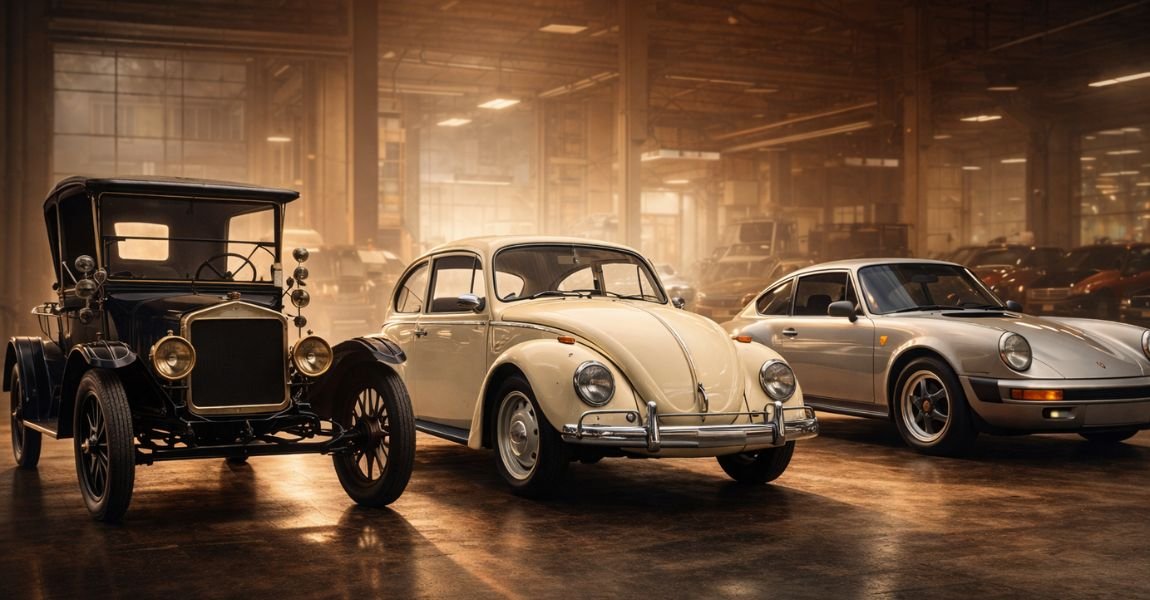
Cars do not become iconic by accident. The models that endure across generations do so because the people who built them made real decisions rather than safe ones. The Ford Model T stands as the clearest example in automotive history. Henry Ford conceived it as practical transportation for ordinary people at a time when cars belonged exclusively to the wealthy. The assembly line production methods Ford developed to build it at scale transformed not just the automotive industry but manufacturing as a whole. More than 15 million units sold across two decades, and its influence on how the world makes things continues today.
The Volkswagen Beetle arrived from a completely different direction and found an equally unexpected audience. Designed in pre-war Germany as a people’s car, it crossed the Atlantic and became a symbol of counterculture in 1960s America, a nation that typically celebrated larger and more powerful vehicles. The gap between what a car was designed to mean and what it actually came to mean is one of the most interesting stories automotive journalism can explore.
Then there is the Porsche 911, a car that should have died three times over. Executives within Porsche spent years planning its replacement because the rear-engine layout made no engineering sense by conventional standards. The full development history of the 911 shows how the car survived internal opposition, evolved through eight generations, and ended up defining what a sports car could be more completely than almost anything else ever built. That story did not happen because of clever marketing. It happened because drivers responded to something in the car that the spec sheet could not capture.
What Makes a Car Actually Worth Talking About
Not every model earns genuine conversation. Some arrive with heavy marketing and disappear without trace because they never delivered on what they promised. Others arrive quietly and spend decades outlasting everything around them. The difference almost always comes down to whether the people who built them made real engineering decisions or simply averaged out every variable until nothing interesting remained.
Real-world performance tells a more complicated story than any press launch suggests. Chassis behaviour on rough road surfaces. How a powertrain responds at motorway speeds after three hours. Whether a cabin stays genuinely quiet under load or just sounds good in a car park. How a driving position actually works for someone spending a full working day behind the wheel. These details separate a car that functions from one that rewards the person driving it, and they only emerge through the kind of extended real-world testing that serious automotive journalism demands.
Long-term reliability shapes the ownership experience more than any single drive impression. A car that generates excitement at launch but develops electrical problems at 40,000 miles tells a fundamentally different story from one that feels ordinary on day one and proves completely dependable across a decade. Enthusiasts who plan to own a car rather than just read about it need both types of information, and they need them presented honestly rather than filtered through manufacturer relationships.
Car enthusiast news that takes both dimensions seriously, the immediate driving experience and the long-term ownership reality, gives readers something they can actually use. That is the standard this publication applies to every model it covers.
Why Running Costs Now Shape Every Car Decision
Something shifted in the automotive conversation over the past few years and it has nothing to do with acceleration figures. Fuel costs now sit at the front of almost every purchasing decision in a way they simply did not five years ago. As of early March 2026, the global average diesel price has reached $1.26 per litre with sharp variation depending on geography, local tax policy, and proximity to supply chains currently under serious strain. For enthusiasts running large displacement engines or performance cars, those numbers translate directly into monthly costs that no amount of driving passion fully offsets.
Manufacturers read the same fuel cost data that buyers do, and production line investment follows accordingly. The shift toward electrification and hybrid powertrains accelerates not because the automotive industry suddenly developed a collective conscience but because the economics now point decisively in that direction. Understanding that context makes coverage of new powertrain technology feel less like a political debate and more like a straightforward account of where the industry has to go.
The numbers behind that shift carry real weight. According to the IEA’s latest electric vehicle market analysis, electric car sales exceeded 17 million globally in 2024, a rise of more than 25 percent year on year. China alone accounted for over 11 million of those sales. That scale of growth changes which models manufacturers prioritise, which engines disappear from production, and what car enthusiast news actually needs to cover to remain relevant.
Why Honest Car Journalism Matters More Than Ever
The internet now produces more automotive content than at any previous point in history. YouTube channels build audiences by filming street cars. Social media fills feeds with renders of vehicles that will never exist. Press fleets generate thousands of identical first-drive reviews published simultaneously with identical talking points. In that environment, content that genuinely serves car enthusiasts has never been harder to find.
What serious enthusiasts actually need is journalism that digs past the surface. Coverage that examines whether a car delivers on its promises across real ownership conditions rather than controlled press drives. Reporting that never softens criticism to protect manufacturer access. That kind of editorial independence sits at the core of how this publication operates, something we cover in depth in our editorial independence story. Analysis that places new models in historical context rather than treating every launch as if nothing existed before it.
Vehicle safety represents one area where honest journalism carries particular weight. When a manufacturer introduces a new safety system, the official NHTSA assessment of updated vehicle safety standards gives buyers independent data that sits outside what the manufacturer controls. Good automotive coverage consistently points readers toward that kind of verification rather than asking them to take anyone’s word for it.
Every car that reaches production carries decades of accumulated engineering knowledge, competitive pressure, regulatory requirement, and market reality inside it. Understanding all of that makes the difference between reading about a car and actually understanding one. That understanding is precisely what this publication works to deliver with every piece it publishes.
Frequently Asked Questions
What kind of cars does this publication cover?
The site covers new car launches, used car guides, performance vehicles, electric models, family cars, and collector models across all price points. Coverage includes extended real-world tests, industry analysis, reliability data, motorsport stories, and the business decisions that determine which cars reach consumers and at what cost.
How does the site approach car reviews differently?
Reviews examine real-world performance, long-term ownership considerations, running costs, and direct comparisons rather than repeating manufacturer talking points. The goal is giving readers information they can actually use when deciding whether a specific model suits their needs and budget.
Does the site cover electric vehicles the same way as traditional cars?
Yes. Electric vehicles receive exactly the same standard of coverage as petrol and diesel models. That means honest assessment of real-world range versus advertised range, charging infrastructure practicality in daily use, build quality, driving dynamics, and full running cost analysis rather than promotional coverage.
Why do fuel costs keep appearing in car coverage right now?
Rising diesel and petrol prices directly affect which cars make financial sense to own, which powertrains manufacturers invest in, and how enthusiasts weigh performance against monthly running costs. Covering cars without acknowledging that reality produces incomplete journalism that fails readers making actual purchasing decisions.
What does this site offer that most automotive content does not?
Most automotive content online either repackages press materials or chases clicks rather than informing readers. Jalopnik cars coverage here applies one standard to every model: honest, thorough, and written by people who understand that every vehicle on the road carries a story worth telling properly.
Where can readers find safety data on specific models?
The National Highway Traffic Safety Administration publishes independent crash test results and recall information for every vehicle sold in the United States. That data gives buyers a factual baseline that sits completely outside what manufacturers choose to communicate through their own marketing.
Every model that rolls off a production line has a story behind it. Jalopnik cars coverage exists to tell those stories properly: with the historical context, the real-world honesty, and the genuine enthusiasm for the subject that readers who actually care about cars have always deserved.

Pingback: Jalopnik News Better Car Coverage
Pingback: FastPeopleSearch and Used Cars: How to vet a Seller Before You Buy - jalopnik.net
Pingback: What Is Jalopnik?
Pingback: Jalopnik: Most Honest Voice in Car News
Pingback: 1957 Chevrolet Bel Air: America's Most Iconic Car
Pingback: Kia Sonet Review: Best Subcompact SUV