


ramechanic.com Review: Is It Worth It for DIY Car Repairs?

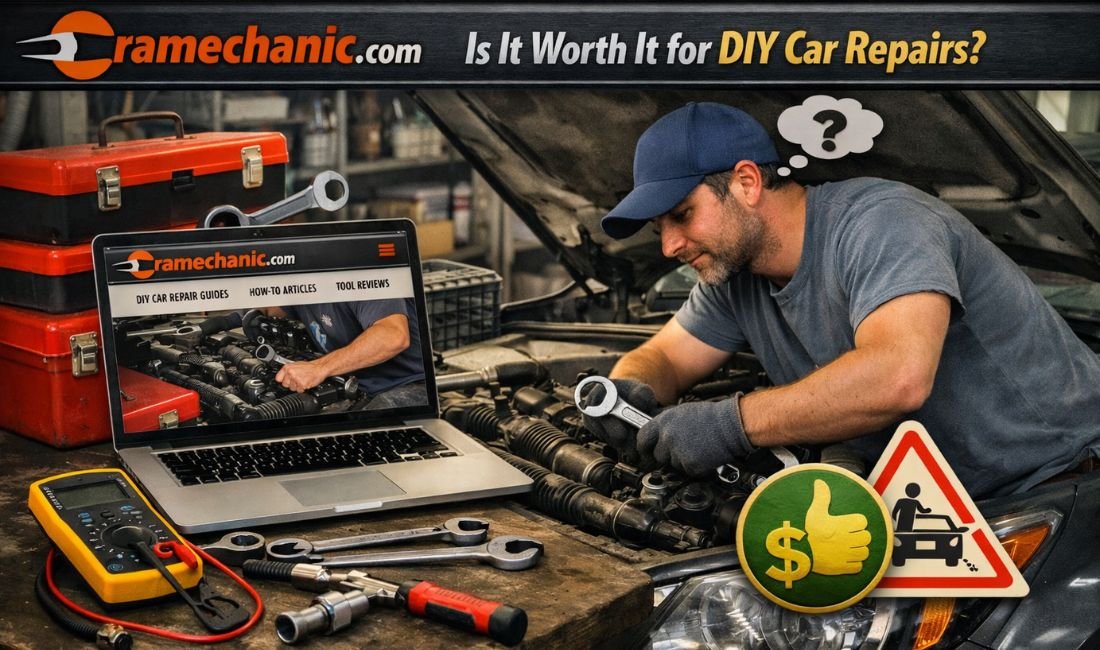
Most people discover ramechanic.com the same way: they search for a fix to a specific car problem, land on one of its guides, and either walk away satisfied or confused about what the site actually is. That is a fair question to have because the site does not make it immediately obvious.
ramechanic.com positions itself as an automotive repair and maintenance resource for everyday drivers and DIY mechanics. It covers oil changes, engine faults, brake jobs, diagnostic codes, and make-specific maintenance guides. The site has been publishing automotive content since at least 2023 and has grown a content library that spans hundreds of articles across car repair, maintenance, and tips.
This review breaks down what the site gets right, where it falls short, who it actually serves, and whether it is worth bookmarking for your next DIY job.
What ramechanic.com Actually Is
ramechanic.com is a free, ad-supported automotive content website. You do not pay a subscription, create an account, or download an app. You search for a problem, click a result, and read a guide. That is the whole interaction.
The site runs on WordPress and organizes its content into three main sections: Car Repair, Maintenance, and Tips and Tricks. Each section hosts dozens of articles, with the maintenance section being the most active as of early 2026.
The team behind the site lists three contributors on the About page: Brent Deberry, Brian Robinson, and Julie Henderson, all described as experienced mechanics with hands-on automotive backgrounds. A fourth name, Steven Taylor, appears frequently as the author on published posts.
One thing worth noting upfront: the site also publishes content that has nothing to do with cars. Slot machine articles, cloud gaming guides, and logistics posts all appear alongside brake pad tutorials and OBD-II diagnostic guides. That breadth is a yellow flag for anyone looking for a focused, specialist resource.
A Brief History of the Site
ramechanic.com launched in 2023 based on its copyright footer and earliest archived content. It started as a tightly focused automotive repair guide site, with the original content centered on make-specific maintenance, oil change procedures, and dashboard warning lights.
By 2024, the site expanded its contributor roster and started publishing more car repair content aimed at intermediate DIYers. Articles began covering specific engine codes, powertrain issues like the Ford 6.7 Powerstroke EGR system, and brand-specific maintenance schedules for vehicles like the Toyota Corolla and Dodge lineup.
In 2025 and into 2026, the content mix widened significantly. The Tips and Tricks section started accepting posts on legal topics, collision claims, and container trailers, which diluted the automotive focus. This is a pattern common to many content sites that scale quickly: the automotive core stays, but the editorial boundaries get fuzzy.
The site claims partnerships with 12 automotive manufacturers and says its guides undergo verification by ASE-certified mechanics, though the site does not publicly list specific certifications, credentials, or named partnerships that users can independently verify.
What Content ramechanic.com Covers
The automotive content library covers a wide range of DIY-relevant topics. Here is a breakdown of the primary coverage areas:
Content Categories Overview
| Category | Example Topics | Skill Level Targeted |
|---|---|---|
| Car Repair | EGR problems, power system replacement, auto body work | Intermediate to advanced |
| Maintenance | Oil change intervals, dashboard lights, tire care | Beginner to intermediate |
| Tips and Tricks | Post-accident inspection, understanding car basics | Beginner |
| Make-Specific Guides | Toyota Corolla, Dodge, Ford Powerstroke | Mixed |
| Diagnostic Content | OBD-II codes, check engine diagnostics | Intermediate |
| Non-Auto Content | Slot games, cloud gaming, legal articles | N/A |
The maintenance section offers the most value for everyday drivers. Guides on dashboard warning lights, Toyota Corolla maintenance schedules, Dodge maintenance, including components like electric cooling systems, and how to read service intervals are well-structured and easy to follow.
The Car Repair section targets people with more hands-on experience. Articles on EGR system problems on the 6.7 Powerstroke, for example, assume you already know what an EGR system does and cover specific failure patterns and repair options rather than explaining fundamentals from scratch.
Content Quality: Where It Stands Up
The stronger articles on ramechanic.com share a consistent format: they open with the problem, explain the cause, provide a step-by-step fix, and close with a cost or time estimate. That structure works well for search-intent readers who come to the site with a specific question and need a direct answer.
The maintenance guides tend to be the most polished. The Toyota Corolla maintenance light guide and the Dodge maintenance overview both include clear service schedules, accurate interval recommendations, and specific procedural steps that a beginner can follow without needing a separate YouTube tutorial.
Torque specifications appear in several repair articles; always verify using the manufacturer’s torque specifications database, which is a detail that separates genuine technical writing from generic SEO content. Listing the correct torque value for a drain plug or a lug nut requires actual mechanical knowledge. When those values appear in ramechanic.com articles, the content becomes genuinely useful rather than just informative.
The site also covers topics that most casual automotive blogs avoid, such as paint safety for technicians, post-accident hidden damage, and the real-world gaps in used car bumper-to-bumper warranties. Those articles show a willingness to tackle the less-glamorous sides of car ownership rather than just top-10 lists.
Where the Site Falls Short
The most obvious weakness is content consistency. The quality gap between the best articles and the weakest ones is noticeable. Some posts read as though a knowledgeable mechanic wrote them from direct experience. Others read as though a writer summarized several other online sources without adding original insight.
The mixed content problem is real and worth taking seriously. When you scroll through the Tips and Tricks section and see an online slot machine article sitting between a collision damage guide and a post-accident inspection checklist, it undermines the sense that this is a specialist resource you can fully trust. A site that publishes anything tends to specialize in nothing.
The About page lists generic bios without verifiable credentials. There are no ASE certification numbers, no linked professional profiles, and no way to confirm the claimed manufacturer partnerships. That is not unusual for small content sites, but it matters when you are deciding whether to follow a torque specification or a brake bleeding procedure that someone anonymous published.
The site’s self-promotional pages make claims that strain credibility. Descriptions of “12 manufacturer partnerships,” a “99.3% accuracy rate,” and “millions of monthly visitors” appear in on-site marketing copy with no supporting data. Those numbers are not independently verifiable and should be treated skeptically.
Some repair articles also lack model-year specificity, especially when comparing older platforms. A guide that covers brake pad replacement for “Toyota vehicles” without specifying whether the procedure applies to a 2008 Corolla or a 2023 RAV4 forces the reader to either verify elsewhere or take a risk. Brake caliper bolt sizes and pad specifications vary significantly across model years.
Content Strengths vs. Weaknesses
| Area | Strength | Weakness |
|---|---|---|
| Maintenance guides | Clear schedules, accurate intervals | Some lack model-year specifics |
| Repair articles | Good on specific systems (EGR, power systems) | Quality inconsistent across posts |
| Diagnostic content | Covers OBD-II codes with context | Less depth than AllData or Mitchell |
| Writing style | Accessible, non-technical tone | Occasionally vague on exact specs |
| Credentials | Claims ASE verification | Not verifiable by readers |
| Content focus | Strong automotive core | Diluted by non-automotive topics |
How It Compares to Other DIY Resources
Understanding where ramechanic.com sits in the landscape helps you use it properly.
DIY Automotive Resource Comparison
| Resource | Type | Cost | Best For | Depth |
|---|---|---|---|---|
| ramechanic.com | Editorial blog | Free | General maintenance, make-specific guides | Beginner to intermediate |
| AllData DIY | Professional database | $26.95/year per vehicle | Exact OEM specs, wiring diagrams | Advanced |
| Mitchell 1 DIY | Professional database | $44.95 for 48 hours | Full repair procedures, TSBs | Advanced |
| Chilton/Haynes | Printed/digital manuals | $20 to $30 per manual | Model-specific full procedures | Intermediate to advanced |
| YouTube (ChrisFix, Scotty Kilmer) | Video guides | Free | Visual learners, step-by-step work | Beginner to intermediate |
| Reddit r/MechanicAdvice | Community forum | Free | Diagnosing specific problems | Variable |
ramechanic.com occupies the same tier as general automotive blogs: free, accessible, and good for orientation. It does not replace a model-specific service manual or a professional database when you need exact torque specs for a head bolt or the correct bleeding sequence for an ABS-equipped brake system.
The realistic use case for ramechanic.com is as a first stop, not a final authority. Use it to understand what a problem is, what parts it involves, and roughly how complex the repair is. Then pull out your Haynes manual or look up the official service procedure before you touch the car.
Who ramechanic.com Is Best For
The site works well for a specific type of reader.
New car owners who want to understand what their dashboard lights mean, how often to change oil, and what a service interval actually covers get real value from the maintenance section. The content is written without assuming prior knowledge and avoids being condescending.
Casual DIYers who handle their own oil changes, air filter swaps, and basic inspections can use the site to verify procedures and spot-check service schedules. The articles cover these tasks clearly enough to build confidence.
Owners of specific makes covered in the make-specific guides (Toyota, Dodge, Ford trucks) get more targeted value and similar performance-focused vehicles. Those articles address real failure patterns on real vehicles rather than generic car advice.
The site is less useful for advanced DIYers tackling engine rebuilds, transmission overhauls, or complex electrical diagnostics. For that level of work, you need manufacturer-level data that a content blog cannot reliably provide.
Pros and Cons
Pros:
- Completely free with no registration required
- Solid maintenance coverage for beginners and intermediate DIYers
- Make-specific guides on Toyota, Dodge, and Ford platforms are genuinely useful
- Accessible writing style that non-mechanics can follow
- Regular content updates keep the library current
- Covers topics most automotive blogs avoid, like paint safety and warranty gaps
- Mobile-friendly layout works well for reading in the driveway or garage
Cons:
- Content quality is uneven across the library
- No verifiable author credentials or named ASE certification numbers
- Mixed with non-automotive content that weakens the site’s specialist credibility
- Lacks the model-year specificity needed for safe DIY repairs on some topics
- Self-promotional claims on the site are not independently verifiable
- Does not replace professional databases for exact OEM torque values and wiring diagrams
- Some articles appear to recycle information from other online sources without adding original mechanical insight
FAQs
Is ramechanic.com a reliable source for DIY car repair?
It is reliable for general guidance on maintenance schedules, dashboard warnings, and common repair concepts. For precise specifications like torque values, check the official vehicle fluid capacity chart, or electrical schematics, you should cross-reference with a vehicle-specific manual or a professional database like AllData or Chilton. Use it as your first stop to understand a problem, not your final authority before turning a wrench.
Does ramechanic.com charge for its content?
No, the site is completely free to access. There is no subscription, membership tier, or paywall. The site generates revenue through display advertising, which is standard for editorial content sites in this space.
Who writes the content on ramechanic.com?
The About page lists Brent Deberry, Brian Robinson, and Julie Henderson as core contributors, all described as experienced automotive enthusiasts and mechanics. Steven Taylor appears as the most frequent byline on published articles. The site claims its technical content undergoes review by ASE-certified mechanics, though those credentials are not publicly listed or verifiable through the site itself.
How does ramechanic.com compare to a Haynes or Chilton manual?
They serve different purposes. A Haynes or Chilton manual covers one specific vehicle in complete procedural detail, including exact torque specs, exploded parts diagrams, and wiring schematics. ramechanic.com offers broader topical coverage but less model-specific depth. For routine maintenance on a well-covered platform, the site can be enough. For a brake caliper rebuild or timing chain replacement, a model-specific manual is a better primary source.
Can beginners safely follow the repair guides on the site?
The maintenance guides are beginner-friendly and cover procedures like oil changes, filter replacements, and dashboard light resets clearly enough for a first-timer to follow. The more advanced car repair articles assume some baseline mechanical knowledge and are better suited to readers who have done basic work before. Always verify any safety-critical specification (torque, fluid type, bleeding sequence) against a second source before proceeding.
Does the site cover all car makes and models?
No. The coverage skews toward common American market vehicles, particularly Toyota, Dodge, and Ford platforms. Coverage of European and Asian brands outside Toyota is thinner. If you own a Saab, a classic Volvo, or a low-volume import, you will likely find more relevant information on manufacturer-specific forums or Haynes manuals than on this site.
Why does ramechanic.com publish non-automotive content?
The site appears to have expanded its content scope over time beyond its original automotive focus. The Tips and Tricks section in particular hosts articles on legal topics, logistics, and even online slot games. This is a common pattern with content sites that scale by accepting a wider range of topics. It does not affect the quality of the automotive guides directly, but it does raise questions about editorial consistency and the site’s long-term focus.
Final Thoughts
ramechanic.com is a useful free resource with a solid maintenance content library, accessible writing, and good coverage of common make-specific problems. For a driver who wants to understand their car better, stay on top of service schedules, and handle basic DIY work with more confidence, the site delivers.
It is not a replacement for a professional repair database, a vehicle-specific service manual, or detailed repair references. The unverifiable credentials, uneven article quality, and mixed content focus keep it from being the kind of source you can cite with full confidence on anything safety-critical.
The honest answer to whether ramechanic.com is worth it: yes, as a free starting point. No, as your only reference when the job involves brakes, suspension, fuel systems, or anything where a wrong specification causes real harm.
Bookmark it for maintenance guidance and diagnostic orientation. Keep your Haynes manual handy for the actual work.