
Speed Yellow Porsche: The Complete Owner’s Guide

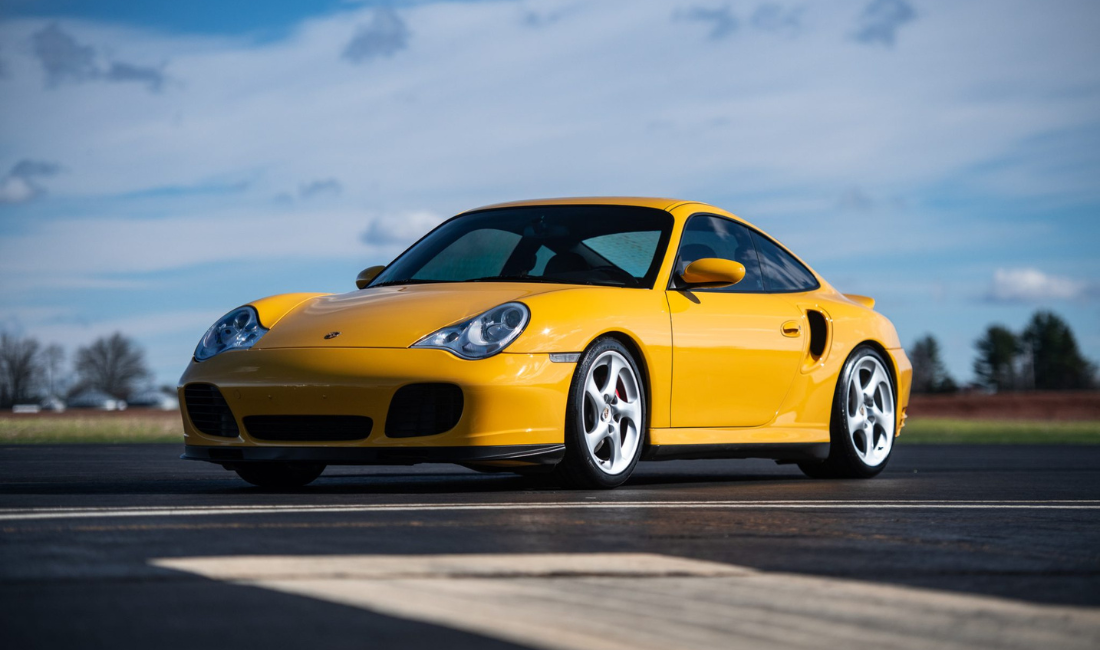
Few colours in the automotive world carry as much personality as Speed Yellow on a Porsche. It polarises opinion from the moment it appears in a car park, draws stares at traffic lights, and inspires devoted fanbases within the marque’s community. This is not a colour that hides. It announces exactly what it is: a sports car, driven by someone who made a deliberate, confident choice. This guide covers everything about Speed Yellow Porsches, from the paint’s origins and the models that wore it best, to what you actually pay to own one today.
The colour earned its reputation because it works on almost every Porsche body shape. The 911’s rear-engined silhouette, the Boxster’s low roadster proportions, and the Cayman’s fastback flanks all carry Speed Yellow without a single awkward line. That versatility, combined with a 19-year production run as a factory standard colour, makes it one of the most studied and discussed shades in the brand’s history.
A Brief History of Speed Yellow
Porsche has never been shy about bold colours, and Speed Yellow proves it. Signal Yellow on the 911 and 912 back in 1966 set the tone, earning cult status that still resonates today. Through the 1970s and 1980s, shades like Bahama Yellow and Sunflower Yellow on the 914 kept the tradition alive, each one looking fast even when parked. Where Porsche leaned into personality, Jalopnik’s coverage of quirky enthusiast cars often highlights how colour alone can define a machine’s character. Speed Yellow sits right in that space a shade that transforms a Porsche from just another sports car into something that sparks debate, much like the way Jalopnik frames oddball classics as icons of attitude.
Speed Yellow arrived on the scene in 1993, carrying the German factory designation Speedgelb and the paint codes L12G and L12H. Porsche launched Speed Yellow in Canada in 1993 and in the United States in 1994, and it wore the factory paint code X4 in some production records alongside the L12G designation. The 968 was one of the very first models to receive the colour, and Speed Yellow was offered as a no-additional-cost exterior choice on 968s when those cars were sold new, which makes the price premium it commands in today’s market entirely market-driven. The 911 (993) followed almost immediately, and Speed Yellow quickly became associated with the final years of air-cooled production, a connection that would define its collector status for decades.
Key Generations That Wore Speed Yellow
The 968 (1993–1995)
The 968 had one of the shortest Speed Yellow production windows, and that rarity now defines its appeal. Speed Yellow 968 coupes achieved the highest M030 sport chassis option rate of any single exterior colour on that model, at 50%. Buyers who chose the colour clearly knew what they wanted: seven out of ten Speed Yellow 968 coupes also included the limited-slip differential (option 220), and eight out of ten specified the painted rear spoiler (option 595). The 968’s 3.0-litre naturally aspirated four-cylinder engine produced 240 PS, and the car remains one of the most forensically documented Porsches precisely because serious enthusiasts tracked every example.
The 911 (993), 1993–1998
Speed Yellow has adorned Porsche models since 1993, and while it can be found relatively often on the 911, 968 drivers chose it far less frequently. The 993 benefited enormously from the colour because its body design, shaped by Tony Hatter and refined under Harm Lagaay’s design direction, features wide rear haunches and a smooth, uninterrupted flank that shows any strong colour at its best. Porsche produced 68,029 units of the 993 over its production life, with the Carrera launching in January 1994 powered by a 3.6-litre, 272 bhp air-cooled flat-six and a six-speed manual gearbox. In 1996, the VarioRam engine update brought output to 285 bhp, and a 3.8-litre, 300 bhp version appeared as standard in the Carrera RS and as a factory option across other 993 variants. Speed Yellow 993s in desirable configurations, particularly Carrera S and Carrera 4S examples, attract the most attention at auction.
The 911 (996), 1999–2004
The 996 generation introduced water cooling and a completely new bodyshell, and it wore Speed Yellow from model year 1999 onwards. The 996 series produced 175,164 units between 1997 and 2006, making it the highest-volume 911 generation. That high production number means Speed Yellow 996s exist in meaningful quantities, but the GT and Turbo variants in this colour remain genuinely scarce and actively sought. The 996 GT3, introduced in 1999 as the first road car to carry that name, and the brutal 996 GT2 both appeared in Speed Yellow in small numbers that disappear from the market quickly.
The 911 (997), 2004–2012
Speed Yellow appeared on the 997 from 2000 through 2012 across both the 911 and the Boxster and Cayman platforms, giving it the broadest production footprint of any generation. The 997 era also produced some of the most desirable Speed Yellow configurations because the model’s wide option list allowed buyers to combine the colour with factory aero kits, the X51 Powerkit, PSE sports exhaust, and GT3 seats. Speed Yellow 997 C4S examples with factory aerokit and X51 are among the rarest specifications buyers encounter, and enthusiasts report those configurations attract a genuine asking price premium. Speed Yellow left the standard catalogue when the 991 generation arrived, making every 997 in this colour both a last-of-kind factory offering and an increasingly appealing used buy.
Boxster and Cayman
The Boxster wore Speed Yellow from 2000 through 2012, and the Cayman carried it from 2006 through 2012, spanning almost the entire 987 generation for both models. The mid-engined layout of both cars means Speed Yellow wraps around a lower, more planted visual mass than on the rear-engined 911. On the 987 Cayman S in particular, which produces up to 295 PS from its 3.4-litre flat-six and manages 0–100 km/h in 5.4 seconds in manual form, the colour reads as properly purposeful rather than showy.
What Made Speed Yellow Different
The Visual Mechanics
Latest Porsche sits in a very specific part of the colour spectrum. It carries a slight red undertone compared to the later Racing Yellow, and its shade sits visually close to Ferrari’s Giallo Fly, Lotus Yellow, and Corvette Yellow, all of which are warm, saturated, strongly automotive yellows designed to read as fast under daylight. On the 911’s flat rear deck and wide haunches, the colour catches light in long, uninterrupted sweeps that make the car appear larger and more dramatic than it actually measures in person.
The colour also behaves differently depending on the accompanying specification. Black wheels deepen the contrast and push the yellow forward visually. Body-coloured wheels soften the overall effect. Factory aero kit pieces painted in Speed Yellow, rather than in black or carbon, create a monochromatic statement that works far better on this particular shade than on most others. Yellow brake calipers, which Porsche offered on the 993 Turbo S as a factory specification, provide a subtle internal echo of the exterior that owners still replicate through aftermarket options today.
The No-Cost Anomaly
When Speed Yellow first appeared in 1993, Porsche offered it at no additional cost on several models, including the 968. Speed Yellow carried no price premium at point of sale on those early cars, which makes the collector premium it commands today entirely market-driven rather than a reflection of any original factory valuation. That detail matters because it confirms the colour’s subsequent appreciation comes from genuine enthusiast demand rather than from a manufactured scarcity or original luxury positioning.
Specs and Models: Speed Yellow By the Numbers
Engine Variants Available in Speed Yellow
| Model | Generation | Engine | Power | 0–100 km/h | Top Speed |
|---|---|---|---|---|---|
| 968 | 1993–1995 | 3.0L M44/01 NA flat-4 | 240 PS | 6.5 sec | 254 km/h |
| 911 Carrera (993) | 1994–1996 | 3.6L M64 air-cooled flat-6 | 272 PS | 5.6 sec | 270 km/h |
| 911 Carrera (993) | 1996–1998 | 3.6L M64 VarioRam flat-6 | 285 PS | 5.5 sec | 274 km/h |
| 911 Carrera RS (993) | 1995–1996 | 3.8L M64/20 flat-6 | 300 PS | 5.0 sec | 278 km/h |
| 911 Turbo (993) | 1995–1998 | 3.6L M64/60 twin-turbo flat-6 | 408 PS | 4.0 sec | 290 km/h |
| 911 Carrera (996) | 1999–2001 | 3.4L M96/01 water-cooled flat-6 | 300 PS | 5.2 sec | 280 km/h |
| 911 Carrera (996.2) | 2002–2004 | 3.6L M96/03 flat-6 | 320 PS | 5.0 sec | 285 km/h |
| 911 GT3 (996) | 1999–2005 | 3.6L M96/76 flat-6 NA | 381 PS | 4.5 sec | 306 km/h |
| 911 Carrera (997.1) | 2005–2008 | 3.6L M97/01 flat-6 | 325 PS | 5.0 sec | 285 km/h |
| 911 Carrera S (997.1) | 2005–2008 | 3.8L M97/01S flat-6 | 355 PS | 4.8 sec | 289 km/h |
| 911 GT3 (997.1) | 2007–2009 | 3.6L GT3 flat-6 NA | 415 PS | 4.1 sec | 310 km/h |
| Boxster S (987.1) | 2006–2008 | 3.4L M97/21 flat-6 | 295 PS | 5.4 sec | 272 km/h |
| Cayman S (987) | 2006–2012 | 3.4L M97/21–22 flat-6 | 295–330 PS | 5.4–5.2 sec | 272–280 km/h |
Generation and Model Comparison
| Generation | Years in Speed Yellow | Models Available | Key Change vs Previous |
|---|---|---|---|
| 968 | 1993–1995 | Coupe, Cabriolet | First model to wear Speed Yellow |
| 993 | 1993–1998 | Carrera, C4, Carrera S, C4S, Turbo, RS | Last air-cooled 911 generation |
| 996 | 1999–2004 | Carrera, C4, C4S, GT3, GT2, Turbo | First water-cooled 911 |
| 997.1 | 2005–2008 | Carrera, C2S, C4, C4S, Turbo, GT3 | Direct fuel injection from 997.2 |
| 997.2 | 2009–2012 | Carrera, C2S, C4S, GT3, GT3 RS | Final Speed Yellow factory year |
| 986/987 Boxster | 2000–2012 | Boxster, Boxster S | Mid-engine Speed Yellow available |
| 987 Cayman | 2006–2012 | Cayman, Cayman S | Hard-top companion to Boxster |
What It Is Like to Drive a Speed Yellow Porsche
You notice the colour before you open the door. In a car park, a Speed Yellow 911 does not blend. It marks your space, your arrival, and your departure in a way that silver and black never do. Some owners love that. Some, after a year, quietly wonder whether they want the attention every single day. Most who live with the colour long-term report that it simply stops registering as unusual, and the car becomes the car rather than the yellow car.
Behind the wheel, the colour changes nothing and everything. Nothing mechanically: a Speed Yellow 993 Carrera delivers the same 272 PS, the same air-cooled howl at 6,800 rpm, and the same rear-engined weight distribution as an identical car in Arctic Silver. But everything experientially: yellow sports cars consistently feel more urgent. The 997 Carrera S in particular, with its 355 PS 3.8-litre flat-six pushing the car to 289 km/h, gains a sense of purpose from the colour that silver-grey examples simply do not project. Drivers describe Speed Yellow 911s as feeling more alive even before the engine starts, which is an irrational reaction to paint but an entirely consistent one.
The Boxster and Cayman in Speed Yellow carry a slightly different character. The mid-engined layout already gives those cars a more precise, balanced cornering feel than the 911, and the lower, wider visual stance in Speed Yellow emphasises the car’s planted quality. A 987 Cayman S, with its 50/50 weight distribution and short-ratio six-speed manual, handles with a directness that the 911 does not quite match, and in Speed Yellow the whole car reads as a focused driver’s tool rather than a grand touring machine that happens to go quickly.
Owning One Today
Choosing a Generation
The right Speed Yellow Porsche depends on what you want from the car. The 993 sits at the emotional top of the range because it carries the full weight of air-cooled history, with only 20% of its parts carried over from the prior 964 generation, and because Speed Yellow on the 993’s body reads with particular intensity. Expect to spend serious money for clean examples. The 996, often unfairly dismissed because of early engine concerns around the intermediate shaft bearing, represents the value proposition in the range. IMS-upgraded 996s with documented history now attract steady prices. The 997 offers the most daily usability combined with the best Speed Yellow specification diversity.
For buyers on a tighter budget, a Speed Yellow 987 Cayman S or 987 Boxster S delivers genuine sports car performance, a mid-engine layout that many drivers consider superior to the 911 dynamically, and the same paint code that made the 993 famous. Porsche owners spend an average of £1,200 to £1,500 annually on maintenance and repairs, with scheduled maintenance averaging between £1,000 and £2,000 per year for most Porsche models, with some years reaching £2,000 to £3,500 when major service intervals arrive.
Known Issues by Model
- 993: Check for oil leaks at the rear main seal, worn timing chain tensioners, and evidence of crash repairs concealed under the wide haunches
- 996/997: IMS bearing on pre-2009 M96 and M97 engines remains the primary concern; confirm replacement or upgrade on any example you consider seriously
- 987 Boxster/Cayman: IMS bearing on 2005–2008 cars, bore scoring in some 987.1 engines; the 987.2 from 2009 onwards eliminated the intermediate shaft entirely
- All generations: Colour consistency matters enormously in Speed Yellow; any panel with slightly cooler or greener yellow indicates a repaint, and the shade is difficult to match perfectly after 15-plus years
Finding a Specialist
Independent Porsche specialists rather than main dealers consistently deliver better value on service. Independent Porsche specialists save owners 20–30% on the same services using the same OEM parts compared to dealer pricing, with some owners reporting savings of 40–50% depending on the specific service. The Porsche community also tracks Speed Yellow examples actively through owner clubs and registries, making provenance research more accessible for this colour than for many others.
Market and Values
Speed Yellow sits in an interesting position in the current Porsche market. Speed Yellow adds value to virtually any 911, Boxster, or Cayman painted in the shade, a view held consistently across the enthusiast community. The premium varies by model and configuration, but the general pattern holds: low-supply, high-demand colours on desirable variants extract a real price difference at point of sale.
Market Values by Condition (2025 Estimates)
| Model | Poor/Project | Average | Good | Excellent/Concours |
|---|---|---|---|---|
| 968 Coupe Speed Yellow | £8,000–£12,000 | £18,000–£25,000 | £30,000–£40,000 | £45,000+ |
| 993 Carrera Speed Yellow | £25,000–£35,000 | £50,000–£70,000 | £80,000–£100,000 | £120,000+ |
| 993 Carrera S Speed Yellow | £50,000–£65,000 | £85,000–£110,000 | £130,000–£160,000 | £180,000+ |
| 996 Carrera Speed Yellow | £10,000–£15,000 | £22,000–£32,000 | £35,000–£48,000 | £55,000+ |
| 996 GT3 Speed Yellow | £55,000–£70,000 | £85,000–£105,000 | £120,000–£150,000 | £165,000+ |
| 997 Carrera S Speed Yellow | £20,000–£28,000 | £38,000–£52,000 | £58,000–£75,000 | £85,000+ |
| 997 GT3 Speed Yellow | £65,000–£80,000 | £100,000–£130,000 | £145,000–£180,000 | £200,000+ |
| 987 Cayman S Speed Yellow | £12,000–£18,000 | £22,000–£30,000 | £32,000–£44,000 | £50,000+ |
Note: A 1995 Speed Yellow 993 Carrera Cup sold at auction in France in April 2024 for €166,500 with 27,000 km. That result demonstrates the premium that low mileage, desirable specification, and striking colour command together at the top of the market. The 993 Turbo (408 PS, twin-turbo, all-wheel drive) in Speed Yellow represents one of the most sought-after combinations in the air-cooled world and trades at levels significantly above standard Carrera pricing.
Ownership and Maintenance Cost Guide
| Cost Category | Annual/Event Estimate | Notes |
|---|---|---|
| Annual servicing (independent specialist) | £800–£1,400 | Oil, filter, inspection, brake fluid |
| Annual servicing (main dealer) | £1,200–£2,200 | Same work, higher labour rates |
| Major service (every 2–3 years) | £1,800–£3,500 | Includes spark plugs, coolant, belts where applicable |
| IMS bearing replacement (996/987) | £900–£1,800 | Critical preventive maintenance on M96/M97 engines |
| Tyre replacement (set of four, PS4S) | £700–£1,200 | Porsche-approved fitment recommended |
| Brake pads and discs (front and rear) | £600–£1,400 | Higher on GT models |
| Speed Yellow paint correction detail | £400–£800 | Yellow fades unevenly; regular professional polish critical |
| Touch-up paint (Speed Yellow L12G/L12H) | £25–£90 | Match accuracy varies; professional application recommended |
Frequently Ask Questions
What is the paint code for Speed Yellow on a Porsche?
Speed Yellow carries two primary factory codes: L12G and L12H, with L12G appearing on earlier cars from 1993 to approximately the late 1990s and L12H carrying through to the end of production in 2012. Additional cross-reference codes for the same colour include 12G, 12H, 1B1, 13G, and X4 depending on the model year and market. When ordering touch-up paint, verify against the colour sticker in the door jamb or front bonnet area of your specific car, as production records occasionally show minor formulation adjustments within the same colour name across different model years.
What is the difference between Speed Yellow and Racing Yellow?
Racing Yellow replaced Speed Yellow in 2012 and sits slightly greener than its predecessor. Speed Yellow carries more red in its formulation, giving it a warmer, egg-yolk character that reads as slightly deeper and richer under direct sunlight. Speed Yellow is closer to an egg yolk colour while Racing Yellow carries a brighter, almost fluorescent tinge. Placed side by side on two cars, the difference reads immediately. In isolation, non-specialist observers frequently misidentify one for the other in photographs where lighting conditions vary. The short answer: Speed Yellow reads warmer and Racing Yellow reads cooler and more citrus-like.
Does Speed Yellow affect resale value?
The effect runs in both directions, and the model matters enormously. Those who specifically want a Speed Yellow Porsche often pay a premium given how few examples come on the market, but a buyer who chose the colour speculatively and wants to sell quickly may need patience. GT models, Turbo variants, and Carrera RS examples in Speed Yellow attract motivated, knowledgeable buyers who actively search for the combination and pay accordingly. Standard Carrera models in Speed Yellow sit in a narrower buyer pool than the same car in silver or black but typically trade at a modest premium over equivalent-condition standard-colour cars rather than at a discount.
Which Porsche model looks best in Speed Yellow?
The 993 generates the most consistent enthusiasm, primarily because the combination of Speed Yellow and the final air-cooled body shape feels historically complete in a way that subsequent generations do not quite replicate. Speed Yellow is like Guards Red in the sense that few Porsche sports cars look bad in it, but unlike red, it takes a special kind of owner to live with a bright yellow car every day. Among the mid-engined cars, the 987 Cayman S carries the colour particularly well because its fastback roofline and wide hips create an unbroken visual mass that Speed Yellow fills without any awkward interruption. The 997 GT3, with its fixed rear wing and wider rear body, ranks closely behind the 993 in terms of visual impact.
Can I still order Speed Yellow on a new Porsche?
Speed Yellow no longer appears in the standard colour catalogue, which Racing Yellow replaced in 2012. However, Porsche’s Paint-to-Sample (PTS) programme allows customers to specify historically used factory colours on current models. Porsche’s own media platform lists Speed Yellow as an available PTS option for the current 911 range, which means new 992 owners can order the colour directly from the factory at a cost premium over standard paint. Delivery times and pricing for PTS orders vary by market and current factory workload.
What interior colours pair best with Speed Yellow?
Black leather remains the single most effective pairing. The contrast between Speed Yellow exterior and a black interior anchors the car visually and prevents the colour from reading as cartoonish. Speed Yellow works particularly well with the contrast of black detail elements throughout all 911 derivative body styles. Some owners successfully specify black leather with Speed Yellow stitching, which creates a subtle echo of the exterior without overwhelming the cabin. Natural Brown and Cognac leathers from the 997 option list work as softer alternatives. Avoid light-coloured interiors, particularly Stone Grey or Cream, which compete visually with the exterior and create a mismatched character between the cabin’s quietness and the car’s exterior energy.
What is the rarest Speed Yellow Porsche?
Speed Yellow on the 968 carries the distinction of the highest M030 sport chassis rate of any colour on that model at 50%, yet the absolute production numbers remain tiny. Among 911 generations, a Speed Yellow 993 Turbo S represents one of the rarest and most valuable combinations. The 993 Turbo S was manufactured by Porsche’s Exclusiv department, and only 183 examples were built, with a small fraction finished in Speed Yellow. Among road-legal variants, a Speed Yellow 997 GT3 RS with factory aerokit and documented provenance sits at the top of the desirability hierarchy for non-GT2 Speed Yellow cars.
Conclusion
Speed Yellow tells you something about the Porsche owner who chose it. They picked the colour that performs exactly zero function while simultaneously transforming how every model it touches reads on the road. From the 968’s compact four-cylinder coupe to the 993 Turbo’s twin-turbocharged, all-wheel-drive flagship, Speed Yellow adds an expressive layer that neutral shades physically cannot provide. The colour spent 19 years on the standard factory price list, appeared across seven distinct model lines, and still commands genuine auction premiums for the right configurations in 2025.
If you want the most historically significant Speed Yellow Porsche available at a reasonable entry point, a clean 987 Cayman S with documented IMS service work and matching factory numbers delivers the colour’s character alongside a mid-engined platform that many experienced drivers genuinely prefer to the 911. If budget allows, a 993 Carrera or Carrera S in Speed Yellow with full history and no paint repairs represents a near-certain long-term value hold. At the top of the market, a low-kilometre 997 GT3 in Speed Yellow with factory aero and manual transmission rarely sits unsold for long, which tells you everything about where this colour stands in the current market.
Speed Yellow started as a no-cost paint option on a front-engined four-cylinder coupe in 1993. Today it sells cars at auction for six figures in multiple currencies. That trajectory says more about the colour than any specification sheet ever could.