
Lexus Reliability: Are They Actually Worth the Money?

People ask this question because Lexus sits in an interesting spot. You pay BMW or Mercedes money, but the brand’s reputation is built on something those two rarely get credit for: not breaking down. That promise holds up surprisingly well in the data, but it comes with caveats that most buying guides gloss over.
So, are Lexus good cars? The short answer is yes, especially compared to other luxury brands. But “good” means different things depending on whether you want a sporty drive, the latest tech, or a car that starts on the first turn every morning for 15 years. Lexus excels at some of those things and falls noticeably short on others.
This article pulls from multiple independent reliability studies, cost-of-ownership data, real owner complaints, and used market values to give you a complete picture. No sales pitch, no brand loyalty, just what the numbers and owners actually say.
A Brief History of Lexus
Toyota launched Lexus in 1989 with a clear goal: build a luxury car that could match European brands on refinement while beating them on reliability and value. The original LS 400 debuted at a starting price of $35,000, roughly $20,000 less than a comparable Mercedes-Benz S-Class, and immediately earned a reputation for exceptional build quality. Road tests at the time praised its near-silent cabin and smooth ride as things that should not have been possible at that price point.
The brand grew steadily through the 1990s and 2000s, adding the RX SUV in 1998 which went on to become one of the best-selling luxury SUVs in the US market for over two decades. The GS sedan, IS compact, and ES midsize sedan rounded out a lineup that targeted every mainstream luxury segment. Lexus also led early adoption of hybrid technology in the luxury space, launching the RX 400h in 2005 well before most European competitors had production hybrids at all.
Today, Lexus operates as Toyota’s global luxury arm, sold in over 90 countries. The brand is entirely built on a shared platform with Toyota, which is central to understanding both its strengths and its limitations. The same engineering culture that makes Toyota Camrys and RAV4s reliable at 200,000 miles applies directly to Lexus vehicles.
Lexus Model Lineup Overview
| Model | Type | Starting Price (New 2025) | Primary Competition |
|---|---|---|---|
| UX | Subcompact SUV | ~$36,000 | Audi Q3, BMW X1 |
| NX | Compact SUV | ~$40,000 | Audi Q5, BMW X3 |
| RX | Midsize SUV | ~$50,000 | BMW X5, Mercedes GLE |
| GX | Midsize 3-row SUV | ~$62,000 | Land Rover Discovery |
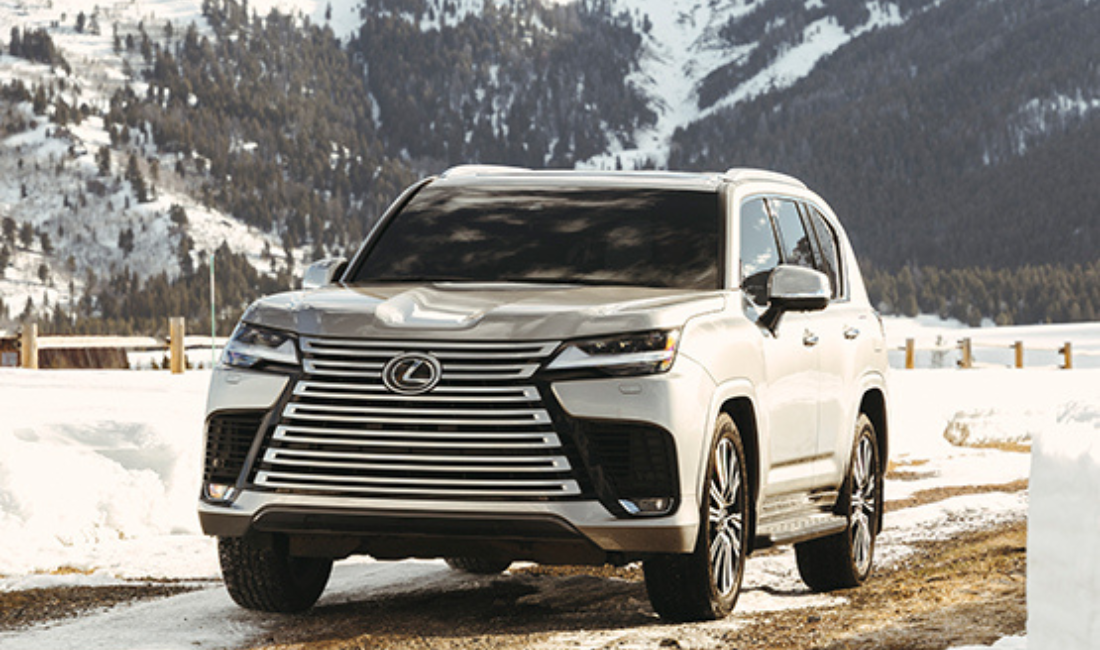
| LX | Full-size SUV | ~$90,000 | Range Rover, Cadillac Escalade |
| ES | Midsize Sedan | ~$43,000 | BMW 5 Series, Mercedes E-Class |
| IS | Compact Sedan | ~$40,000 | BMW 3 Series, Audi A4 |
| LS | Full-size Sedan | ~$80,000 | BMW 7 Series, Mercedes S-Class |
| LC | Sports Coupe | ~$100,000 | BMW 8 Series, Porsche 911 |
| RZ | Electric SUV | ~$55,000 | BMW iX3, Mercedes EQC |
What Makes Lexus Different from Other Luxury Brands
The fundamental reason Lexus is more reliable than BMW, Audi, or Mercedes comes down to engineering philosophy. European luxury brands prioritise driver engagement, advanced technology, and performance numbers. They build complex systems, tight tolerances, and sport-tuned components that deliver an exciting experience but require more maintenance attention as they age.
Lexus, built on Toyota’s manufacturing framework, prioritises consistency and low failure rates first. When Toyota engineers design a component, the standard question is how long it will last under real-world conditions, not just how good it feels during a test drive. This produces cars that drive more softly, have simpler powertrains, and use fewer experimental technologies, but also cars that spend less time in a workshop.
The second factor is the Toyota-Lexus shared platform. Most Lexus models share powertrains, suspension layouts, and major mechanical components with Toyota models that have millions of real-world miles of proven reliability data. The Lexus ES is essentially a luxury-trimmed Camry platform. The RX shares major components with the Highlander. That is not a criticism. Shared platforms mean that engineers and mechanics know exactly what goes wrong and how to fix it, which reduces both failure rates and repair costs.
The third factor is hybrid technology. Lexus invested early in hybrid powertrains across almost its entire lineup. The Toyota-developed hybrid system used in most Lexus models has been in production since 2005, is now in its fourth generation, and has accumulated hundreds of millions of fleet miles of reliability data. It is one of the most proven powertrain technologies in the automotive industry.
Reliability Ratings: What the Data Shows
The headline number is this: Lexus ranked first in the J.D. Power 2025 Initial Quality Study with a score of 166 problems per 100 vehicles, the best score of any brand. This was the third consecutive year Lexus ranked first in the J.D. Power Vehicle Dependability Study, which measures three-year ownership problems. The industry average in the 2025 dependability study was 202 PP100. Lexus scored 140 PP100, 62 points better than average. No other luxury brand came close.
For context, here is how the major luxury brands compared in the J.D. Power data:
| Brand | 2025 Dependability Score (PP100) | vs Industry Average |
|---|---|---|
| Lexus | 140 | 62 better than average |
| Industry Average | 202 | Baseline |
| BMW | ~210+ | Above average problems |
| Mercedes-Benz | ~220+ | Above average problems |
| Audi | 275 (2024 IQS) | Well above average problems |
| Land Rover | Among highest | Consistently high problem rates |
Lower PP100 scores are better. Lexus’s score of 140 against an industry average of 202 is not a marginal improvement. It is a significant gap, particularly given that most other luxury brands score worse than the overall industry average.
Consumer Reports, which runs its own separate owner survey data, has historically placed Lexus in the top tier for brand reliability. In late 2025, Consumer Reports noted that Lexus dropped from third to sixth place in its brand reliability rankings, primarily due to problems with the new third-generation GX SUV, which earned below-average reliability marks for 2024. The GX issues centred on squeaky front brakes and failing massage seat air hoses, neither of which are powertrain problems, but they pulled down brand averages. The core models, the ES, RX, IS, and NX, have continued to earn strong reliability scores independently.
Model-Level Reliability Scores (Auto Reliability Index, 2026 Data)
| Model | Average Reliability Score | Best Year | Notes |
|---|---|---|---|
| Lexus RX | 85/100 (Excellent) | 2022 (90/100) | Most consistent performer |
| Lexus ES | Strong across generations | 2019 onwards | Minor electrical recalls only |
| Lexus NX | 80+/100 | 2022-2023 | Watch 2021 first-year model |
| Lexus GX (3rd gen) | Below brand average | 2024 struggling | Brake and seat issues |
| Lexus IS | Above average | 2019-2023 | Older gen; consistent |
| Brand Average | 81/100 | Varies | All models rated Excellent |
What Owning a Lexus Actually Feels Like
The first thing you notice in any Lexus is how quiet it is. Cabin insulation is a deliberate priority across the lineup, and it shows. Road noise, wind noise, and mechanical noise are all better controlled than in equivalent BMW or Mercedes models at the same price point. The ES and LS, in particular, have been praised consistently for hushed highway cruising.
The ride quality on most Lexus models is tuned toward comfort rather than sportiness. The RX, ES, and NX absorb road imperfections smoothly and prioritise passenger comfort over driver feedback. This is exactly what the typical Lexus buyer wants. If you want a car that communicates with the road and rewards aggressive driving, the Lexus IS and the LC are the only models in the lineup that genuinely try to deliver that, and even they cannot match a BMW 3 Series or Audi A4 for driver engagement.
Interior materials and build quality are strong across the range. Surfaces feel solid, panel gaps are tight, and the overall sense of quality holds up well through years of use. Multiple owner surveys cite interior quality as one of the top reasons buyers return to Lexus for a second or third vehicle. Seat comfort on longer journeys is consistently praised, particularly in the ES and RX.
The infotainment system has been one of the weakest points in recent Lexus history, though it has improved. Older models from 2019 to 2021 used a trackpad controller for the infotainment system that reviewers and owners widely criticised as awkward and distracting to use while driving. Lexus moved to touchscreen-primary systems in newer models and has continued to improve, but infotainment remains the category where Lexus consistently gets the most owner complaints, from freezing screens to unresponsive controls to interface logic that requires too many steps for basic functions.
Are Lexus Good Cars to Buy Used?
This is where the brand’s reliability reputation pays off most directly for buyers. A well-maintained used Lexus from a reliable model year is one of the best used luxury car purchases available, because the mechanical risks that make used BMWs and Mercedes expensive are largely absent.
The key is knowing which models and years to target.
Best Used Lexus Models to Buy
Lexus RX (2019 to 2022): The RX 350 and RX 450h from this period hit a sweet spot of proven reliability, reasonable depreciation, and modern features. The 2022 RX earned a 90/100 reliability score, the highest of any Lexus model in recent years. Avoid the first-year 2023 redesign if possible, as first-year models of any generation carry higher risk.
Lexus ES (2019 to 2023): The seventh-generation ES, which launched in 2019, brought a major update including a new platform, improved interior, and better driving dynamics. The ES 350 and ES 300h (hybrid) from this period are among the most reliable used luxury sedans available. Annual maintenance costs average around $468 to $551 depending on the year, which is low for the luxury segment.
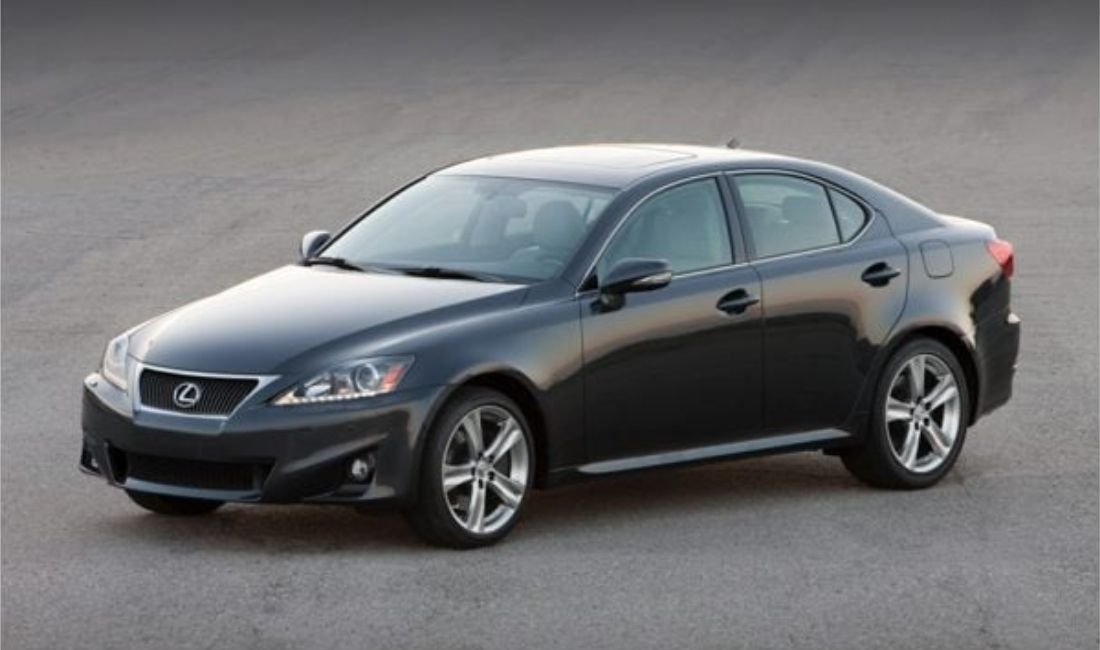
Lexus IS (2021 to 2023): The IS received an update in 2021 with improved powertrain options and a refreshed interior. Reliability scores from this period are strong. The IS does have a smaller rear seat and narrower cabin than some rivals, so check fit before committing.
Lexus NX (2022 to 2024): The redesigned NX launched in 2022 with significant improvements over the outgoing model, including a proper touchscreen infotainment system and a plug-in hybrid option. Early reviews noted higher-than-expected complexity for a Lexus, so buy a 2023 or 2024 for the best balance of new features and resolved early issues.
Used Models to Approach With Caution
Lexus GX (2024 first year of third generation): Consumer Reports flagged brake and seat issues with the 2024 GX. Wait for later build dates or the 2025/2026 model if buying this generation.
Any Lexus from 2007 to 2009 ES: The 2007 and 2008 ES had reported transmission and oil consumption issues. Older than 15 years now, these require more thorough inspection.
First-year models of any generation: Lexus, like any brand, has higher problem rates in the first production year of a major redesign. The 2019 ES, 2022 NX, and 2023 RX all had slightly more early owner complaints than their second-year counterparts.
Ownership and Maintenance Costs
This is the strongest argument for Lexus over European luxury competitors. The annual maintenance cost difference between a Lexus and a comparable BMW or Mercedes is significant over a 5 to 10-year ownership period.
| Brand | Average Annual Repair Cost (RepairPal) | 10-Year Maintenance Est. | Chance of Major Repair |
|---|---|---|---|
| Lexus | ~$551 per year | ~$7,000 to $9,000 | Low |
| Mercedes-Benz | ~$908 per year | ~$13,000+ | Above average |
| BMW | ~$968 per year | ~$15,991 | Significant |
| Audi | ~$987 per year | ~$13,500+ | Significant |
| Land Rover | High | ~$18,304 | Very high |
The ES 350 specifically averages $468 per year in maintenance costs according to RepairPal data, which sits well below even some non-luxury brands. Toyota-based powertrains use widely available parts, and the service intervals on most Lexus models are longer than comparable European vehicles, meaning fewer dealer visits per year.
Typical Service Costs by Job
| Service | Lexus Average Cost | BMW Equivalent | Mercedes Equivalent |
|---|---|---|---|
| Oil change (synthetic) | $120 to $180 | $150 to $250 | $150 to $280 |
| Brake pad replacement (axle) | $200 to $350 | $300 to $500 | $300 to $550 |
| Transmission service | $200 to $300 | $400 to $700 | $400 to $600 |
| Spark plug replacement | $200 to $350 | $400 to $700 | $400 to $700 |
| Timing belt/chain service | Chain, low maintenance | Higher | Higher |
| Major 60,000-mile service | $400 to $600 | $800 to $1,500 | $800 to $1,500 |
One important note: Lexus uses dealer-exclusive pricing for some parts and services, particularly for newer models with more complex electronics. While mechanical servicing is affordable, any work involving newer infotainment systems, driver assistance sensors, or electrical components can close the cost gap with European brands. Always get a quote for specific jobs rather than assuming every repair will be inexpensive.
Used Market Values by Model
Lexus holds its value better than most luxury brands, which is both good news and a slight complication for used buyers. You pay less depreciation over time if you own one, but you also pay a premium when buying used compared to a similarly aged BMW or Mercedes.
Depreciation and Used Value Reference
| Model | New Price (approx.) | 3-Year Value | 5-Year Value | 5-Year Depreciation |
|---|---|---|---|---|
| RX 350 | ~$57,000 | ~$44,500 | ~$33,900 | ~33% |
| ES 350 | ~$49,000 | ~$35,400 | ~$27,100 | ~36% |
| ES 300h | ~$44,000 | ~$34,300 | ~$26,300 | ~40% |
| IS 300 | ~$42,000 | ~$28,000 est. | ~$22,000 est. | ~45% |
| NX 350 | ~$43,000 | ~$31,000 est. | ~$25,000 est. | ~42% |
| Luxury midsize SUV avg. | Varies | Varies | Varies | ~50% avg. |
The RX 350’s 33% five-year depreciation compares very favourably to the luxury midsize SUV category average of 50.2%. Buying a two-year-old RX 350 saves approximately $6,400 to $13,000 compared to new while leaving most of the vehicle’s useful life intact. The 2024 model year specifically has been identified by multiple depreciation analysts as the best value year to buy used, paying around 86% of the original price with 92% of useful life remaining.
Condition-Based Pricing Guide (Used RX 350, approx. 2022 model year)
| Condition | Private Party Value | Trade-In Value | Notes |
|---|---|---|---|
| Excellent | $38,000 to $42,000 | $34,000 to $38,000 | Under 40k miles, full service history |
| Good | $33,000 to $38,000 | $29,000 to $34,000 | Average miles, minor wear |
| Fair | $27,000 to $33,000 | $23,000 to $28,000 | Higher miles or deferred maintenance |
| Poor | Below $25,000 | Below $22,000 | Damage, no service records |
Lexus Weaknesses: What They Do Not Get Right
No brand earns honest coverage without addressing the downsides, and Lexus has real ones.
Infotainment has been a persistent problem. The trackpad-based interface used in models from roughly 2014 to 2021 earned widespread criticism from owners and reviewers. Consumer Reports specifically flagged it as distracting while driving. Lexus has moved to touchscreen-primary systems in recent models, but older used examples still carry this frustration. Infotainment freezing and slow response times appear in owner complaint data across multiple model years.
Driving dynamics are not the priority. If you want a car that actually involves you in the driving process, most Lexus models disappoint. The ES, RX, and NX are comfortable highway cruisers but feel numb and disconnected compared to a BMW X3 or Audi Q5. The IS is better, but it still cannot match the BMW 3 Series for outright driver engagement. This is not an accident; it is a deliberate choice by Lexus engineers. Know what you are buying.
The GX reliability drop is worth watching. The third-generation GX, which launched for 2024, had well-documented issues with squeaky front brakes and massage seat failures early in its production run. Consumer Reports moved the GX from above-average to below-average reliability for 2024, which is unusual for Lexus. The 2025 and 2026 models show improvement, but if you are buying a 2024 GX used, inspect those brakes carefully and check for any outstanding recalls.
Used Lexus cars hold value well, which means you pay for it. A used 2022 RX with 40,000 miles costs notably more than a comparable BMW X5 or Mercedes GLE from the same year. The lower depreciation that makes Lexus great to own means the used market premium is real. Run the full cost-of-ownership numbers including purchase price, not just maintenance costs, to make sure the total equation works for your budget.
Some newer models show increased complexity complaints. As Lexus has added more technology, driver assistance systems, and software-dependent features, the gap between Lexus and Toyota in terms of ownership simplicity has narrowed. Infotainment software bugs, sensor calibration issues after minor collisions, and electrical system complaints have increased slightly across the lineup compared to the simpler models of the early 2010s.
FAQ
Are Lexus good cars for long-term reliability?
Yes, Lexus is one of the most reliable brands you can buy at any price point, not just in the luxury segment. J.D. Power ranked Lexus first overall in both its Initial Quality Study and Vehicle Dependability Study for three consecutive years through 2025. The 2025 dependability score of 140 problems per 100 vehicles compares to an industry average of 202, and most luxury competitors score worse than the industry average. Engines and transmissions, the most expensive components to repair, are consistently rated as the strongest areas for Lexus. If long-term reliability and low mechanical risk are your main criteria, Lexus is the right answer.
Are Lexus good cars to buy used?
For most buyers, yes. A used Lexus from a reliable model year, particularly the RX 350 (2019 to 2022), ES 350 or ES 300h (2019 to 2023), or IS (2021 to 2023), offers low mechanical risk, reasonable maintenance costs, and proven long-term durability. The main consideration is price: Lexus retains value better than European competitors, so used examples cost more than a comparable BMW or Mercedes with the same mileage. You pay less over time in repairs, but more upfront. If you have the service history, those cars often prove to be very sound purchases.
How do Lexus maintenance costs compare to BMW and Mercedes?
The difference is substantial. Average annual repair costs for a Lexus run around $551 per year according to RepairPal data, compared to approximately $968 for BMW and $908 for Mercedes-Benz. Over 10 years, BMW owners spend an estimated $15,991 in maintenance and repair costs. Lexus owners spend roughly $7,000 to $9,000 over the same period. That gap of $6,000 to $9,000 over 10 years is significant and is one of the strongest arguments for Lexus if total cost of ownership matters to your decision.
What are the most common problems with Lexus cars?
Infotainment issues are the most frequently reported owner complaint across the brand, including freezing screens, unresponsive touchpad controls on older models, and slow software response. The 2024 GX had specific issues with squeaky front brakes and massage seat air hose failures. Older ES models from 2007 to 2009 had transmission and oil consumption complaints. Outside of those specific examples, powertrain problems are rare, and when they do occur, parts are generally less expensive than European equivalents. Electrical issues, particularly with sensors and accessories, appear more in newer tech-heavy models.
Does Lexus hold its value better than BMW or Mercedes?
Yes, significantly. A Lexus RX 350 depreciates approximately 33% over five years, compared to the luxury midsize SUV category average of 50.2%. BMW and Mercedes depreciate faster, particularly after warranty expiry when potential buyers factor in higher maintenance costs. Kelley Blue Book named Lexus the best luxury brand for resale value, and models including the UX, NX, RX, ES, LS, and RZ all earned individual segment awards. The flip side is that buying used Lexus costs more than buying used European luxury, so the strong resale value benefits sellers more than buyers.
Which Lexus model is most reliable?
Based on current data, the Lexus RX consistently scores as the strongest model for reliability, with the 2022 RX earning a score of 90/100 from the Auto Reliability Index, the highest of any Lexus model in the database. The ES is also consistently strong and has the lowest average annual maintenance cost in the lineup at around $468. The NX (2022 onwards) has been reliable once past its first-year production period. The GX is the outlier, having dropped in reliability rankings for 2024 due to the new generation’s teething issues.
Is Lexus worth buying over a Toyota?
It depends entirely on what you are paying for. A Lexus shares its mechanical backbone with Toyota, so you get the same fundamental reliability for a significantly higher price. What you gain with Lexus is a quieter cabin, more premium interior materials, better standard safety and comfort features, and generally softer ride tuning. If the luxury experience matters to you, yes. If you want the same reliability at a lower price and do not care about premium finishes, a Toyota RAV4 or Camry accomplishes most of what the Lexus NX or ES does mechanically, for $10,000 to $20,000 less.
Conclusion
The data is consistent across every major reliability study: Lexus good cars is not just marketing. Three consecutive years at the top of J.D. Power’s dependability rankings, annual maintenance costs roughly half that of BMW and Mercedes, and a used market that holds value better than almost any other luxury brand all point in the same direction.
The honest version of the recommendation looks like this. Buy a Lexus if you want a quiet, comfortable, long-lasting luxury car with low maintenance costs and want the peace of mind that comes from a proven, simple powertrain. The ES and RX are the standout models for this purpose. If you are buying used, the 2019 to 2022 RX 350 and 2019 to 2023 ES 350 or ES 300h are the strongest choices based on reliability data.
Do not buy a Lexus if you want a car that excites you on a back road, needs cutting-edge tech that actually works flawlessly, or needs a spacious, practical interior at the lower price points. The IS and LC are the only genuinely driver-focused options in the lineup, and the infotainment in older used models remains a real daily frustration.
For most people looking at the luxury market, the Lexus value proposition is strong. You pay a premium over mainstream Toyota, but you get a car that earns its keep through years of low-drama, low-cost ownership in a way that most European luxury alternatives simply do not match.
If you want a broader automotive perspective on how Lexus compares in the wider luxury market, the coverage at Jalopnik approaches cars from an ownership-first standpoint that aligns well with how most buyers actually experience their vehicles. And for anyone considering a specific Lexus purchase decision, an independent pre-purchase inspection service like those reviewed at Jalopnik’s RAMechanic guide can help confirm the condition of any used example before money changes hands.