
Ferrari Red Wine Color: The Full Story of Rosso Vinaccia

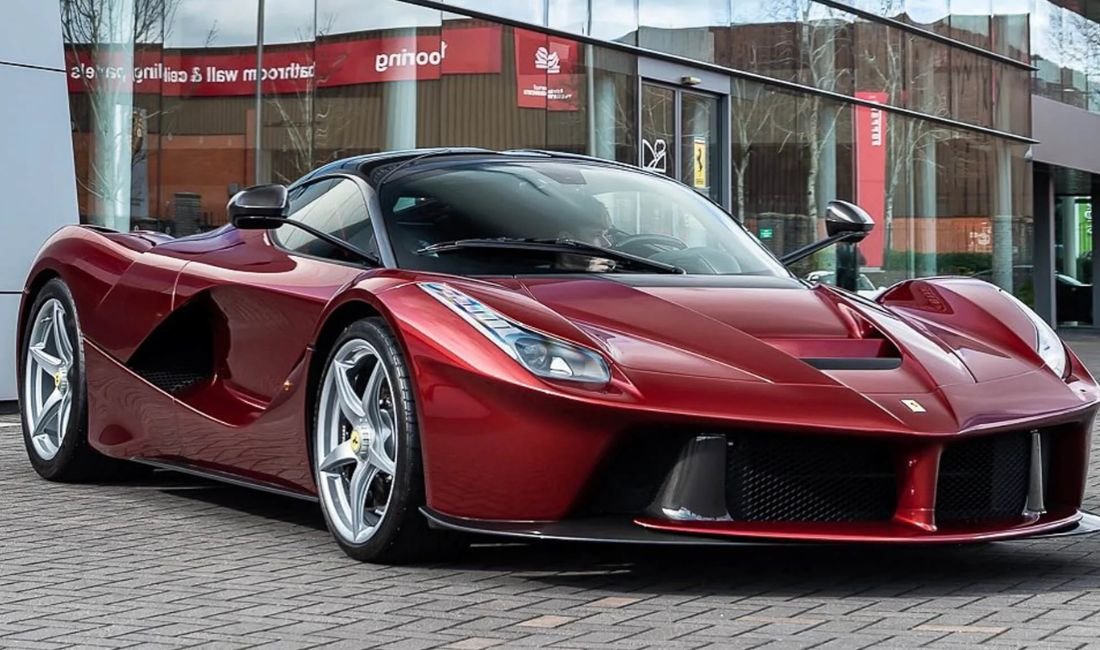
Ferrari has built more than 50 distinct shades of red since Enzo Ferrari first opened his doors in Maranello. Most people know the bright, blood-red Rosso Corsa. Far fewer know the shade that came before it, a deep, almost maroon hue called Rosso Vinaccia, which translates directly from Italian as “red wine.” It sits closer to burgundy than to racing red, and it tells a story about Ferrari’s identity that the flashier colors tend to drown out.
Rosso Vinaccia is not a marketing creation or a modern special edition. It has been in Ferrari’s color catalog since at least 1957, making it one of the oldest surviving factory finishes in the brand’s history. Today, it lives outside the standard configurator and requires a special request through Ferrari’s personalization program, which means the cars wearing it are exceptionally rare. Understanding this color means understanding a whole chapter of Ferrari history that most buyers never discover.
A Brief History of Ferrari’s Red Identity
Italy became associated with red race cars in the early 20th century through a system where competing nations each received a national racing color. Italy drew red, and Italian manufacturers, including Alfa Romeo, Maserati, Lancia, and later Ferrari, all painted their competition cars in what became known as Rosso Corsa, or “racing red.” The hex value for Rosso Corsa sits at #E4002B, an RGB breakdown of 228, 0, 43.
Ferrari’s very first road car, the 125 S of 1947, appeared in a deep burgundy red, not the vivid racing shade people associate with the brand today. That deeper tone was closer in spirit to Rosso Vinaccia, a color the Maranello factory formally established in its palette by 1957. The company built its road car identity around Italian viticulture as much as around racing, and grape-related naming (vinaccia refers to the pressed grape residue left after winemaking) fit naturally into a culture where Ferrari’s hometown sits in Emilia-Romagna, Italy’s heartland for both automotive engineering and food and wine production.
As Ferrari’s Formula 1 wins accumulated through the 1950s and 1960s, Rosso Corsa took over as the dominant shade on both racing and road cars. But Vinaccia never disappeared entirely. Ferrari kept it available as a historical color option, and over the decades, it appeared on everything from early V12 grand tourers to modern mid-engined supercars, including the SF90 Stradale, ordered through the Atelier and Tailor Made programs.
Key Generations: How Ferrari’s Reds Evolved
The Classic Period (1970 to 1995)
Ferrari codified its color language during this era. Rosso Corsa became the brand’s primary offering and the default choice for buyers who wanted the full Ferrari experience. The Rosso Nearco shade appeared on the 365 GTB/4 Daytona in the late 1960s, and the orange-leaning Rosso Dino continued to attract buyers wanting something different. Vinaccia remained in the historical palette but rarely appeared on new orders during this period.
The Modern Era (1996 to 2010)
Ferrari reintroduced several historical colors during the 2000s as the company recognized that long-standing buyers wanted to reference the brand’s past. Rosso Dino came back in 2002 when a client specified it for an Enzo. Rosso Scuderia, a brighter shade with orange undertones named after the F1 team, debuted on the Challenge Stradale and became the Formula 1 livery color between 2003 and 2007. The range expanded significantly as Ferrari’s configurator became a formal customer experience rather than an informal discussion.
The Expansion Era (2011 to Present)
Ferrari now produces more than 50 confirmed shades of red. Rosso Imola launched as the debut color for the 296 GTB, described as a deep metallic red with orange undertones. Rosso Portofino arrived with the Portofino model in 2017 as a metallic triple-coat finish. The company created Rosso 70 Anni for its 70th anniversary in 2017. Rosso F1-75 and Rosso Racing 2025 mark recent race-linked releases. Rosso Vinaccia sits alongside a metallic variant called Vinaccia Metallizzato, an even rarer finish that blends deep red and purple tones with a metallic shimmer.
What Makes Rosso Vinaccia Different
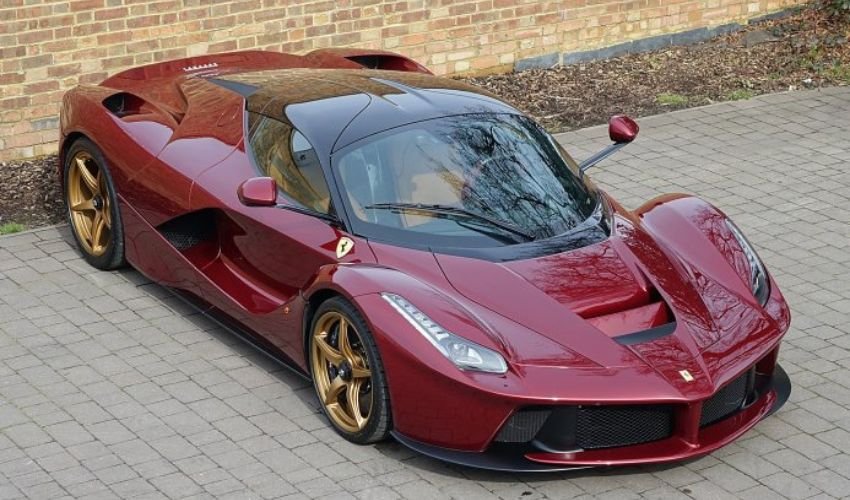
The visual quality of Rosso Vinaccia sets it apart from every other Ferrari red in production. While Rosso Corsa reads as a pure, vivid red in daylight, Vinaccia shifts toward maroon and purple depending on the light source and angle. It carries no metallic flake in its standard formulation, so the finish absorbs light rather than reflecting it, giving the car a more subdued and formal presence.
The inspiration for the color came from the remains of grapes after the juice is removed during winemaking. That agricultural reference connects it to the landscapes around Maranello in a way that Rosso Corsa, rooted in international racing regulation, simply does not. Ferrari also offers a metallic version, Vinaccia Metallizzato, which maintains the deep burgundy character while adding depth through micro-flake that becomes visible in direct sunlight or artificial light.
Because Vinaccia requires a special request rather than a standard configurator selection, Ferrari applies it through its Atelier or Tailor Made programs. The Tailor Made program starts at reportedly over 100,000 euros added to the vehicle price. The result is a car that essentially no other buyer will replicate on the lot.
Specs and Models: Ferrari’s Red Range in Detail
Ferrari Rosso Vinaccia Paint Specifications
| Specification | Detail |
|---|---|
| Italian Name | Rosso Vinaccia / Vinaccia |
| English Translation | Red Wine / Wine Red |
| Color Family | Dark Red / Maroon |
| Finish Type | Solid (standard) / Metallic (Vinaccia Metallizzato variant) |
| Factory Availability | Since 1957 |
| Current Status | Special request only (not on standard configurator) |
| Primer Recommendation | Dark surface primer (standard form) |
| Hex Approximation | ~#6B1A1A (solid) / varies (metallizzato) |
| Visual Character | Shifts toward dark purple / maroon in shadow; deep burgundy in daylight |
| Related Variants | Vinaccia Metallizzato, Rosso Metallizzato |
Ferrari Red Spectrum: Key Shades Compared
| Color Name | Character | Finish | Era / Status |
|---|---|---|---|
| Rosso Corsa | Pure vivid red | Solid | 1920s to present; most common |
| Rosso Corsa Met | Rosso Corsa with delicate metallic tint | Metallic | Launched 2015 with 488 GTB |
| Rosso Scuderia | Bright red with orange undertones | Solid | F1 livery 2003–2007 |
| Rosso Imola | Deep metallic red with orange | Metallic | Launch color of 296 GTB (2021) |
| Rosso Mugello | Darker than Corsa | Solid | Named after Mugello Circuit |
| Rosso Vinaccia | Deep burgundy / maroon | Solid | Since 1957; special request |
| Vinaccia Metallizzato | Burgundy with metallic depth | Metallic | Rare; special request |
| Rosso Fiorano | Dark red, named after test track | Solid | Historical palette |
| Rosso Dino | Orange-leaning red | Solid | 1960s; revived 2002 |
| Rosso Portofino | Rich metallic red | Triple-coat metallic | Launched 2017 with Portofino |
| Rubino Micalizzato | Darkest red; purple hints | Metallic | Available on request only |
Current Ferrari Models That Accept Rosso Vinaccia
| Model | Engine | Power | Base Price (USD, 2025) | Body Style |
|---|---|---|---|---|
| Ferrari 296 GTB | 3.0L Twin-Turbo V6 + PHEV electric | 819 hp combined | ~$351,950 | Mid-engine coupe |
| Ferrari 296 GTS | 3.0L Twin-Turbo V6 + PHEV electric | 819 hp combined | ~$384,950 | Retractable hardtop |
| Ferrari SF90 Stradale | 4.0L Twin-Turbo V8 + 3 electric motors | 986 hp combined | ~$530,000+ | Mid-engine coupe |
| Ferrari SF90 Spider | 4.0L Twin-Turbo V8 + 3 electric motors | 986 hp combined | ~$580,000+ | Retractable hardtop |
| Ferrari Roma Spider | 3.9L Twin-Turbo V8 | 612 hp | ~$281,920 | Convertible grand tourer |
| Ferrari 12Cilindri | 6.5L Naturally Aspirated V12 | 830 hp | ~$400,000+ | Front-engine grand tourer |
| Ferrari Purosangue | 6.5L Naturally Aspirated V12 | 725 hp | ~$390,000 | Four-door, four-seat SUV |
Note: Vinaccia availability on any specific model requires confirmation with Ferrari directly, as the color program accepts custom requests rather than guaranteeing availability on all configurations.
What It Is Like to Drive a Ferrari in Rosso Vinaccia
The color does not change how a Ferrari drives. But it changes how you feel about the car before you even turn the key, and that psychological dimension matters more in this segment than almost anywhere else in the automotive world.
Standing next to a 296 GTB in Vinaccia, the car reads as something altogether more serious than a Corsa-painted example. The deep burgundy absorbs light the way a well-aged wine holds color, and the paint’s formal character creates a contrast against the car’s aggressive aero surfaces that Rosso Corsa, which shouts, simply cannot achieve. The car whispers.
On the road, the 296 GTB’s 819 combined horsepower from its 3.0-liter twin-turbo V6 and electric motor system delivers 0 to 62 mph in 2.9 seconds. The SF90 Stradale, with 986 combined horsepower from a twin-turbo V8 and three electric motors, covers the same sprint in 2.5 seconds. Ferrari fits an 8-speed dual-clutch gearbox to both, and the transitions arrive fast enough that you notice the sound change before you register the shift. Driving either car means managing enormous torque from a standing start, and the Vinaccia exterior frames that experience with an elegance that the brighter reds do not attempt.
Owning One Today
Ordering a Ferrari in Rosso Vinaccia today requires a conversation with your Ferrari dealer about the Atelier or Tailor Made program. The Atelier program handles paint selections and interior variations at more moderate premiums. The Tailor Made program, which starts at reportedly over 100,000 euros above the vehicle price, handles more complex customizations, including rare historical colors, custom trim, bespoke stitching, and unique exterior treatments.
New Ferraris come with a 3-year factory warranty and 7 years of complimentary scheduled maintenance under the Ferrari Genuine Maintenance Program, covering all cars made from model year 2015 onward. After the 7-year free maintenance period ends, owners typically budget between $3,000 and $8,000 annually for scheduled servicing, depending on mileage and the model. That puts long-term Ferrari ownership costs in a very different bracket from mass-market luxury alternatives — if you want a sense of how the math compares at the other end of the reliability spectrum, this breakdown of Lexus ownership costs gives useful context. Major services on V12 models or extensive hybrid system work can push beyond that range.
Ferrari’s paint system uses multi-layer construction. Solid finishes like the standard Vinaccia use two primary layers over a carefully prepared base, and the dark primer that the color requires means that paint correction and touch-up work demands matching that foundation. Any repaint or repair on a Vinaccia-finished car should go through a Ferrari-authorized body shop familiar with the historical color’s application requirements.
Ownership Considerations
- Vinaccia requires dark surface primer, which makes DIY touch-up work harder than with standard Rosso Corsa
- The solid (non-metallic) version shows swirl marks more visibly under direct sunlight than metallic finishes
- Paint protection film and ceramic coating are strongly recommended given the special-order status and replacement cost
- Full documentation of the Tailor Made or Atelier specification increases the car’s provenance value significantly at resale
- Keep all Ferrari Genuine Maintenance records; they support Ferrari Classiche certification for older cars and maintain warranty integrity
Market and Values
How Red Affects Ferrari Resale
Red is by far the most popular color in the Ferrari secondary market, accounting for roughly 54 percent of all Ferraris sold at auction and through dealers in pre-2000 models, and approximately 45 to 50 percent of all modern Ferraris changing hands. Rosso Corsa alone accounts for about 30 percent of all red Ferraris sold. Given that volume, the data shows something counterintuitive: red Ferraris do not command the highest median prices.
Analysis of pre-2000 Ferrari sales shows a median price of approximately £106,213 for red examples, compared to £112,948 for non-red cars, a gap of roughly 6 percent. Red actually ranks eighth among colors by median sale price in that segment. Maroon and burgundy-toned Ferraris rank third at approximately £239,009 in the same analysis. Rosso Vinaccia, sitting firmly in the burgundy-maroon range, benefits from that rarity premium rather than suffering from the volume discount that standard Rosso Corsa faces.
Rare Ferrari colors command premiums of 15 to 25 percent over common finishes in the collector market. Special-request colors like Vinaccia, combined with documented Tailor Made provenance, consistently attract buyers who specifically searched for that specification and are willing to pay accordingly. The same dynamic plays out across the exotic car world: buyers of rare factory colors like Porsche’s Speed Yellow face a similar calculus between visual statement and secondary market depth.
Ferrari Market Values by Model Condition
| Model | Concours / Near-New | Good Driver | Project or High Miles |
|---|---|---|---|
| Ferrari 296 GTB (2022–2025) | $360,000 – $430,000 | $310,000 – $360,000 | $270,000 – $310,000 |
| Ferrari SF90 Stradale (2020–2024) | $540,000 – $620,000 | $460,000 – $540,000 | $390,000 – $460,000 |
| Ferrari Roma (2020–2024) | $230,000 – $280,000 | $190,000 – $230,000 | $150,000 – $190,000 |
| Ferrari 458 Italia (2010–2015) | $240,000 – $300,000 | $190,000 – $240,000 | $150,000 – $190,000 |
| Ferrari 488 GTB (2015–2019) | $250,000 – $310,000 | $200,000 – $250,000 | $165,000 – $200,000 |
Note: Rosso Vinaccia examples with documented Tailor Made specifications typically achieve premiums at the top of or above these ranges. Values are approximate and reflect mid-2025 market conditions.
Ownership and Maintenance Cost Estimates
| Cost Category | Annual Estimate | Notes |
|---|---|---|
| Scheduled servicing (in 7-year free period) | $0 | Covered under Ferrari Genuine Maintenance Program |
| Scheduled servicing (after 7-year period) | $3,000 – $8,000 | Varies by model, mileage, and service interval |
| Major service (e.g., belts, hybrid battery check) | $6,000 – $15,000 | Every 3–5 years depending on usage |
| Insurance (annual) | $5,000 – $12,000 | Varies significantly by driver profile and location |
| Tires (set replacement) | $2,000 – $5,000 | Performance tires; Pirelli P Zero range typical |
| Carbon ceramic brake service | $10,000 – $25,000 | Rotors and pads; service interval varies widely |
| Paint protection film (full car) | $5,000 – $12,000 | Strongly recommended for Vinaccia given rarity |
| Ceramic coating | $2,000 – $5,000 | Protects the multi-layer paint system |
| Storage (climate-controlled, annually) | $1,800 – $4,800 | For cars not driven year-round |
FAQ
What does “Rosso Vinaccia” mean, and why is it called a red wine Ferrari?
Rosso Vinaccia translates literally from Italian as “wine red” or “red wine.” The name comes from “vinaccia,” which refers to the pressed grape residue left after winemaking removes the juice. The color itself reflects that source material: it runs much deeper and darker than conventional Ferrari red, sitting in the maroon and burgundy range rather than the vivid spectrum of Rosso Corsa. Ferrari has used this name since at least 1957, making it one of the oldest surviving named finishes in the brand’s entire catalog. The connection to Italian winemaking culture fits naturally, given that Maranello sits in Emilia-Romagna, where food and wine heritage is as much a point of regional pride as automotive engineering.
Is Rosso Vinaccia available on current Ferrari models?
Rosso Vinaccia is not part of Ferrari’s standard configurator. It sits outside the nine or so red hues available to clients through the regular ordering process. Customers who want this color need to engage Ferrari’s Atelier program for more straightforward paint customizations, or the full Tailor Made program for a completely bespoke vehicle. The Tailor Made program starts at reportedly over 100,000 euros above the base car price, and it involves working with a personal designer from Ferrari’s team in Maranello. Confirmed recent examples include Ferrari SF90 Stradale cars finished in Rosso Vinaccia, ordered through this bespoke channel.
How does Rosso Vinaccia compare visually to Rosso Corsa?
The difference is dramatic. Rosso Corsa carries a hex value of #E4002B, a pure, saturated red that reads almost fluorescent in bright daylight. Rosso Vinaccia sits considerably darker, trending toward a deep burgundy or maroon that absorbs rather than reflects light. In shadows or indoor lighting, Vinaccia can appear almost purple. The standard Vinaccia has no metallic flake, giving the surface a flat, almost velvety depth. Rosso Corsa is a car that announces itself; Vinaccia is a color that rewards close attention. Many observers who see a Vinaccia Ferrari for the first time do not recognize it as a Ferrari at all, which is part of its appeal to buyers wanting to stand apart.
Does a rare color like Rosso Vinaccia increase resale value?
Rare and special-request colors generally command premiums in the Ferrari secondary market. Data on pre-2000 Ferrari auction results shows maroon and burgundy-toned cars achieving median prices roughly twice those of standard red examples. Modern Tailor Made Ferraris with rare finishes and full documentation consistently attract buyers willing to pay above market for documented rarity and provenance. That said, the premium depends heavily on finding a buyer who specifically wants that finish. A Vinaccia SF90 will attract fewer bidders than a Rosso Corsa example in a general listing, but the buyers it does attract tend to bid competitively. Full documentation of the Tailor Made specification, service history, and original window sticker all strengthen the car’s position.
What care does Rosso Vinaccia paint require compared to standard Ferrari colors?
The dark, solid (non-metallic) formulation of Rosso Vinaccia shows imperfections and swirl marks more readily than metallic finishes, because metallic flake scatters light and partially masks surface defects. Owners should use high-quality paint protection film on high-impact areas, and a full-car application is a reasonable investment given the color’s rarity and replacement cost. The paint requires dark surface primer, which complicates touch-up work; any stone chips or minor damage should go to a Ferrari-authorized body shop that has experience with historical and special-request colors. Ceramic coating helps protect the multi-layer system. Storage in a climate-controlled environment and regular hand washing with pH-neutral products are standard best practices, but the dark solid finish rewards that extra attention more visibly than lighter metallic shades.
Are there any famous or notable Ferrari cars finished in Rosso Vinaccia?
The most documented modern example is a Ferrari 458 Italia originally ordered in Vinaccia by broadcaster Chris Evans, which was later sold to Olympic cyclist Sir Chris Hoy. That particular car drew attention precisely because of its unusual color specification on a model that the vast majority of buyers ordered in conventional reds or other standard finishes. More recently, Ferrari SF90 Stradale examples in Rosso Vinaccia have appeared through specialist paint protection workshops in Europe, confirming that the color remains available through special order on current models. Given that the shade lives outside the public configurator, fully documented examples with authenticated Tailor Made orders carry genuine collectibility independent of the underlying model.
Conclusion
Rosso Vinaccia sits at an interesting intersection in Ferrari’s history. It predates most of the brand’s modern color identity, connects directly to Italian cultural heritage rather than to racing, and requires more commitment to order than any color on the standard palette. The fact that it has survived in Ferrari’s catalog since 1957 says something real about the brand’s relationship with its own past.
If you are deciding between Rosso Corsa and a special-request finish for your next Ferrari, the choice comes down to what relationship you want with the car. Rosso Corsa connects you to every other red Ferrari on the road and to every Formula 1 victory the Scuderia ever achieved. Rosso Vinaccia connects you to something quieter, older, and rarer: the Italy that makes wine in the same valleys where it builds the fastest cars on earth.