

Why Does My Car Vibrate at High Speeds?

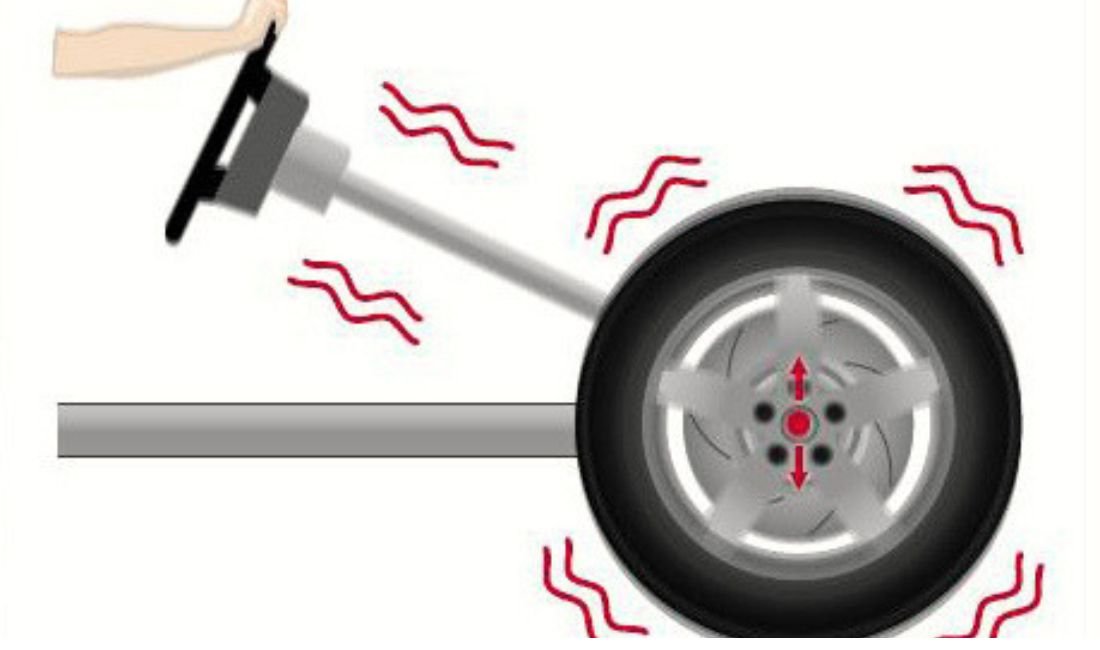
Your car felt fine at 40 mph, but somewhere around 65 or 70 mph, you feel it, a shake coming through the steering wheel, the seat, or the floor. It does not go away. It might ease up slightly, then come back stronger as you accelerate more.
That vibration is your car telling you something is wrong. It could be something as cheap as a $15 tire balance, or it could be a failing wheel bearing working toward a complete wheel-off scenario. The gap between those two outcomes is huge, both in safety terms and in repair costs. The only way to narrow it down is through proper vehicle diagnostics and understanding what each cause actually feels like and where it shows up.
This article covers every real cause of high-speed vibration, how to tell them apart, what each fix costs, and what happens if you ignore them.
A Brief History of High-Speed Vibration Diagnosis
Before modern wheel balancing machines became standard shop equipment in the 1960s, mechanics diagnosed vibration almost entirely by feel and experience, a period that shaped much of modern automotive journalism and vehicle diagnostics. A tire out of balance would wear out in 10,000 miles on a good road. On a bad one, in half that. Drivers accepted a certain level of shake as normal at highway speeds because the roads themselves were uneven, and tire manufacturing tolerances were loose.
Radial tires, which became mainstream in the US through the 1970s, reduced a lot of road noise and vibration but also made imbalance more noticeable when it existed. The more stable contact patch of a radial tire meant drivers suddenly felt vibrations they had previously absorbed through bias-ply flex.
Today, computer-controlled wheel balancing machines can detect weight differences of less than one gram. Road-force balancing machines, which simulate the weight of the vehicle pressing down on a spinning tire, can find internal belt damage that no visual inspection would catch. Despite all this, vibration at high speeds remains one of the most common complaints at repair shops, and it still gets misdiagnosed regularly because several different problems feel almost identical from the driver’s seat.
The 8 Main Causes Explained
1. Unbalanced Tires
This is the most common cause of what causes a car vibrating at high speeds, and the cheapest to fix. Every tire and wheel combination has tiny weight variations built in during manufacturing. A balancing machine adds small clip-on or stick-on weights to compensate. When those weights fall off, or when a tire wears unevenly, the imbalance creates a rhythmic force that grows with speed.
The vibration from unbalanced tires typically starts showing up between 55 and 70 mph, then sometimes smooths out again above 80 mph as the harmonics change. You feel it most in the steering wheel if it is a front tire, or in the seat if it is a rear tire. Even a one-ounce imbalance can cause noticeable shaking at highway speeds.
2. Bent or Damaged Wheels
Hitting a pothole or a curb at speed can bend an alloy or steel wheel just enough to cause vibration without leaving obvious visible damage. A bend as small as 1 to 2 millimeters in the rim creates a wobble that a balancing machine cannot correct. The machine will keep adding and removing weights without reaching a stable balance.
The giveaway here is that standard balancing does not fix the problem. If a shop balances your tires and the vibration comes back within a few hundred miles, or does not improve at all, a bent wheel is the next thing to check. A wheel runout test on a lathe or a specialized machine confirms it.
3. Tire Damage: Bulges, Flat Spots, and Belt Separation
Internal tire damage does not always show on the outside. A tire can develop a broken or shifted internal belt from impact damage, a manufacturing defect, or sustained underinflation. This creates a high spot that hits the road once per revolution, producing a thumping vibration that worsens with speed.
Flat spots develop on tires that sit stationary for extended periods, especially in cold weather. They can feel like an out-of-balance tire, but often resolve after the tire warms up. Belt separation is more serious and requires immediate replacement. A bulge in the sidewall means the structural cords inside have already failed. That tire needs to come off the car the same day.
4. Wheel Alignment Problems
Misalignment does not directly cause vibration the way an unbalanced tire does, but it causes uneven tire wear that leads to vibration over time. Toe misalignment, where tires point slightly inward or outward, scrapes the tire across the road with every rotation. Over 5,000 to 10,000 miles, that scraping creates feathered or scalloped wear patterns that produce noticeable vibration.
The other sign of alignment-related vibration is that the car pulls to one side. If your car drifts left or right when you let go of the wheel, and you also feel vibration at highway speeds, the two problems share a root cause. An alignment check costs $75 to $150 and should follow any tire replacement or after hitting a significant pothole.
5. Worn or Failing Wheel Bearings
A wheel bearing sits inside the hub and allows the wheel to spin with minimal friction. When a bearing wears out, it develops internal play, which translates into vibration that can feel similar to an unbalanced tire. The key difference is timing: bearing vibration starts at lower speeds, often around 25 to 40 mph, and gets progressively worse as speed increases rather than peaking and smoothing out.
A worn bearing also produces a low grinding or humming noise that changes pitch when you switch lanes or curve left or right. That noise shifting with lateral load is a reliable indicator. If you ignore a failing bearing long enough, the wheel can develop enough play to affect braking and steering. In extreme cases, a completely failed bearing can allow the wheel assembly to separate from the car at speed.
6. Brake Rotor Problems
Warped or unevenly worn brake rotors cause a very specific type of vibration: one that only appears, or dramatically worsens, when you apply the brakes. At highway speeds, pressing the brake pedal while a front rotor has uneven wear sends a pulsing vibration straight up through the steering wheel. Rear rotor problems show up as a shudder felt through the seat or floor rather than the steering wheel.
Rotor thickness variation as small as 0.002 inches can create noticeable brake judder. Overheating from aggressive or prolonged braking bakes brake pad material onto the rotor surface unevenly. Blue or purple discoloration on the rotor face is visual evidence of this. Brake-related vibration accounts for roughly 30% of all non-routine brake service visits.
7. CV Axle and Driveshaft Problems
On front-wheel drive and all-wheel drive vehicles, the constant velocity (CV) joints transfer power from the transmission to the wheels while accommodating suspension movement. A torn CV boot lets grease escape and allows dirt and water in. Once contaminated, the joint wears quickly. A worn inner CV joint causes vibration that worsens under acceleration, felt through the floor or seat.
On rear-wheel drive trucks and some cars, the driveshaft connects the transmission to the rear axle. Worn universal joints (U-joints) or a driveshaft that has lost a balance weight causes vibration under load that you feel through the floor. This vibration typically increases with engine load, meaning it gets worse when you accelerate and eases when you lift off the throttle.
8. Suspension Component Wear
Shocks, struts, ball joints, tie rods, and control arm bushings all degrade over time. Worn suspension components allow wheels to move in ways they should not, turning minor road irregularities into pronounced shaking at highway speeds. Unlike tire or wheel issues, suspension-related vibration often feels less rhythmic and more random, or it changes character depending on the road surface.
Ball joints and tie rod ends that have significant play allow the wheel to wobble under load. You can sometimes detect this by jacking the car up and grabbing the wheel at 9 and 3 o’clock to check for horizontal play, versus 6 and 12 o’clock for wheel bearing play. Significant movement in either direction means something needs replacing.
Cause Comparison Table
| Cause | Speed Range | Where You Feel It | Noise | Worse When Braking? |
|---|---|---|---|---|
| Unbalanced tires | 55 to 75 mph | Steering wheel or seat | Usually none | No |
| Bent wheel | 40 mph and up | Steering wheel or seat | Sometimes a hum | No |
| Tire belt damage | Any highway speed | Seat or steering wheel | Thumping | Slightly |
| Alignment wear | 60 mph and up | Steering wheel | Scraping sound possible | No |
| Wheel bearing | 25 mph and up, worsens | Steering wheel or whole car | Grinding or humming | Can worsen |
| Warped rotors | Any speed, braking only | Steering wheel or seat | Groaning | Yes, specifically |
| CV joint / driveshaft | 40 mph and up, under load | Floor or seat | Clicking on turns (CV) | No |
| Suspension wear | Varies, road-dependent | Whole car | Clunking or knocking | Sometimes |
Specs and Technical Reference
| Component | Acceptable Tolerance | Failure Threshold | Service Interval |
|---|---|---|---|
| Tire balance | 0 to 0.25 oz imbalance | Above 0.5 oz causes noticeable shake | Every 5,000 to 7,500 miles or with rotation |
| Wheel runout | Less than 1.0 mm | Above 1.5 mm causes constant vibration | Inspect after pothole or curb impact |
| Rotor thickness variation | Less than 0.001 inch | Above 0.002 inch causes brake judder | Measure at each brake service |
| Wheel bearing play | Less than 0.002 inch axial | Any noticeable hand-rocking of wheel | Inspect at 60,000 to 80,000 miles |
| CV boot condition | Intact, no cracks | Any split or grease leak requires attention | Inspect at every oil change |
| Shock/strut effectiveness | Rebounds within 1 bounce | More than 1 bounce or leaking fluid | Replace at 50,000 to 70,000 miles typically |
| Toe alignment | Within 0.1 degree of spec | More than 0.5 degree causes rapid tire wear | Check annually or after suspension work |
What It Feels Like to Drive With Each Problem
An unbalanced tire produces a buzzing or humming vibration that builds gradually as you accelerate. It often peaks around 65 to 70 mph and can seem to lessen above 80 mph. It feels consistent, almost rhythmic, and you can usually feel it in your hands on the steering wheel.
A bent wheel feels nearly identical to an unbalanced tire, but no amount of balancing fixes it. The vibration tends to be slightly more irregular, and it often starts at a lower speed.
Tire belt damage, especially internal belt separation, produces a distinct thump. It feels like driving over small speed bumps at regular intervals, and those intervals get closer together as speed increases because the wheel is completing more revolutions per second.
A failing wheel bearing produces a persistent growling or grinding sound that shifts in pitch when you change lanes. The vibration is present at lower speeds and gets worse with distance, not just with acceleration. You might also feel it in the seat and steering wheel simultaneously.
Warped rotors are distinctive because the vibration appears or dramatically increases only when you touch the brake pedal. At highway speed, a light press on the brakes sends a pulsing shudder through the wheel. Let off the brakes, and it goes away.
CV joint problems show up as vibration under load during acceleration, often with a clicking noise during tight, slow turns. Driveshaft issues feel like vibration from under the floor that worsens the harder you accelerate.
How to Diagnose It Yourself Before Going to a Shop
Start by noting exactly when the vibration happens. Write down the speed it starts, where you feel it in the car, whether it changes when you brake, and whether it gets worse during hard acceleration or steady cruising.
Check your tires visually. Look for any bulge in the sidewall, visible damage to the tread, or objects embedded in the rubber. Check the tire pressure while you are there. Incorrect pressure, either high or low, affects how the tire contacts the road and can amplify existing imbalances.
Look at the tires for uneven wear. If one edge of the tread is worn more than the other, alignment is the likely cause. If you see a wavy or scalloped wear pattern around the circumference, suspect suspension or balance issues.
With the car safely jacked up, grab each wheel and try to rock it. Grab at 12 and 6 o’clock and feel for any vertical play, which points to a worn ball joint. Grab at 9 and 3 o’clock and feel for horizontal play, which points to a tie rod. Rock the top of the wheel in and out for bearing play. Any noticeable movement means something needs attention.
Spin each wheel by hand and listen for grinding. A smooth spin with no noise is good. A rough feel or grinding sound means the bearing is worn.
Take it to a shop with a road-force balancer if basic tire balancing does not solve the problem. Road-force balancers simulate the load of the car on the tire and can detect belt shifts and internal damage that a standard spin balancer misses.
Repair and Maintenance Cost Breakdown
| Repair | DIY Cost | Shop Cost | Notes |
|---|---|---|---|
| Tire balance (4 tires) | Not practical DIY | $60 to $200 | Most shops include with tire purchase |
| Wheel alignment (4-wheel) | Not practical DIY | $75 to $200 | Needed after suspension work or new tires |
| Tire replacement (each) | $80 to $200 part only | $100 to $300 installed | Depends on size and brand |
| Bent wheel repair | $50 to $150 part | $75 to $200 labor | Severe bends require wheel replacement |
| Wheel bearing replacement | $40 to $150 part | $150 to $400 per wheel | Front wheels cost more due to complexity |
| Brake rotor resurfacing | Not recommended DIY | $100 to $200 per axle | Only viable if rotor is above minimum thickness |
| Brake rotor replacement | $40 to $100 per rotor | $300 to $600 per axle with pads | Front and rear should be done in axle pairs |
| CV axle replacement | $50 to $150 part | $300 to $700 per axle | Inner joints cost more than outer |
| Shock/strut replacement | $50 to $150 each part | $250 to $600 per axle | Replace in pairs (both sides) |
| Ball joint replacement | $20 to $80 part | $150 to $400 per joint | Often requires alignment after |
What Happens If You Ignore It
Ignoring high-speed vibration almost always makes the repair more expensive. An unbalanced tire that you drive on for 10,000 extra miles eats through the tread unevenly and ruins the tire. A tire that would have cost $120 to replace now needs to come off early, and the uneven wear may have stressed the suspension components underneath it.
A wheel bearing that you drive on after it starts grinding adds play to the wheel. That play stresses the CV joint, the brake rotor, and the suspension arms around it. A $300 bearing repair becomes a $1,500 job covering the bearing, the CV axle, and potentially a warped rotor.
A CV axle with a torn boot costs around $300 to $700 to replace when caught early. Left alone until the joint grinds itself apart, you lose the ability to accelerate and risk sudden power loss at speed.
The most serious scenario involves a wheel bearing that fails completely. When bearing support fails entirely, the wheel can separate from the hub while driving. This is not a theoretical risk. It causes immediate loss of steering and braking on that corner of the car.
FAQ
Why does my car vibrate at high speeds but not low speeds?
Speed amplifies any imbalance or wobble in the rotating parts of your car. A weight difference of half an ounce on a wheel creates almost no force at 20 mph but generates significant repetitive force at 65 mph because the wheel is spinning roughly three times faster. Tire balance, bent wheels, and worn bearings all behave this way. The vibration may seem to smooth out above 80 mph as the harmonic frequency shifts, but the problem is still there and still causing wear.
Can low tire pressure cause vibration at highway speeds?
Yes, though it is not as common as balance or bearing issues. Underinflated tires flex more on each revolution, which creates heat and can cause a subtle rhythmic vibration. More importantly, running chronically low on pressure creates flat spots and accelerates internal wear that leads to belt damage, which does cause serious vibration. Always check the pressure cold before driving, and match the number on the door jamb sticker, not the maximum pressure listed on the tire sidewall.
What causes a car to vibrate at high speeds specifically when braking?
Brake rotors with uneven thickness variation, which is often called warping, cause vibration that appears or worsens under braking pressure. The caliper presses pads against a rotor surface that is not perfectly even, and that unevenness sends a pulsing force through the wheel. If you feel the vibration in the steering wheel when braking, the front rotors are the issue. If it comes through the seat or floor, look at the rear rotors. Rotor thickness variation as small as 0.002 inches is enough to cause noticeable pedal pulsation.
How do I know if it is a wheel bearing or a tire balance issue?
The key difference is where the vibration starts. Tire balance problems typically peak between 55 and 70 mph and can feel better above 75 mph. Wheel bearing vibration starts at lower speeds, often 25 to 40 mph, and gets progressively worse the faster you go, with no sweet spot. A failing bearing also produces a grinding or humming noise that changes pitch when you steer left or right at speed. If swapping the front tires to the rear changes where you feel the vibration, it is a tire or balance issue. If the noise and vibration stay in the same corner of the car, suspect the bearing.
Is it safe to drive with high-speed vibration?
It depends entirely on the cause. An unbalanced tire or mild alignment issue is not an immediate safety hazard, but it causes ongoing damage that becomes one. A failing wheel bearing, significant tire damage, or a worn CV joint creates a genuine safety risk at highway speeds. The safest approach is to get it diagnosed before driving at speed again. The cost of diagnosis at a shop is almost always under $50, and it tells you exactly how urgent the repair is.
What causes my car to vibrate at high speeds after new tires?
New tires require balancing after mounting, and occasionally a tire has an internal inconsistency that a standard balance cannot correct. If your vibration appeared after new tires, the most likely causes are improper balancing, a tire with a manufacturing defect, or incorrect mounting. Ask the shop to recheck the balance, and if it still vibrates, request road-force balancing rather than standard spin balancing. Road-force machines detect internal belt shifts that standard machines miss. Also, verify the technician torqued the lug nuts to spec, typically 80 to 100 ft-lbs for most passenger vehicles. Over- or under-torqued lug nuts can distort the rotor hat and cause vibration.
How often should I balance my tires to prevent vibration?
Most manufacturers and tire makers recommend balancing every 5,000 to 7,500 miles, which typically lines up with tire rotation intervals. Many shops include balancing with rotation as part of a package, so the practical answer is to do both every other oil change. You should also balance immediately after hitting a significant pothole, after any tire repair, or any time you feel a new vibration develop. Driving through potholes and over rough surfaces can knock balance weights off the wheel, so a vibration that appears suddenly rather than gradually often traces back to a lost weight.
Conclusion
High-speed vibration is one of those car problems that rarely fixes itself and almost always gets more expensive the longer you wait. The good news is that most causes follow distinct patterns. A vibration that peaks at 65 mph and lives in the steering wheel is almost always a balance issue. A grinding noise that shifts with lane changes is a bearing. A shake that only appears when you brake points to the rotors. A vibration that worsens under hard acceleration and eases when you lift points to the drivetrain.
Start with the cheapest diagnosis first. A tire balance and inspection costs $60 to $80 and eliminates the most common cause immediately. If that does not solve it, move to alignment and a wheel inspection. If the problem is still there, a bearing check and brake inspection round out the likely causes. Most shops can work through all of these in a single visit.
The real mistake is assuming that vibration is just a comfort issue. Every cause on this list, from unbalanced tires to a failing bearing, actively damages other parts of your car while it goes unaddressed. The vibration you feel today is the wear you are putting into your tires, suspension, and drivetrain with every mile.